Inprova
2 Olympic Way, Woolstone Grange Avenue
Birchwood, Warrington, WA2 OYL
Everything we do at Inprova comes back to one purpose: to positively impact people’s lives. Social value is how we make that count. The way an organisation spends its money shapes the communities it serves, and we help our customers direct that spend towards suppliers who put something back, so procurement does more than simply buy goods and services.
In 2025 we generated £2.17 million in social value through supplier contracts, up 8.5% on the previous year, and we’re aiming for £2.2 million in 2026. That sits alongside a record £193.5 million spent with SMEs and direct support for local families through our own fundraising and volunteering.
Social value has moved from a nice-to-have to a legal and strategic priority.
Social value is now a legal duty in public procurement, not a policy preference. Each UK nation has its own rules, but they’re all moving the same way: more weight on local economic impact, and more pressure to evidence it. In England, Wales and Northern Ireland, the Procurement Act 2023 requires contracting authorities to have regard to the importance of maximising public benefit. In England, the National Procurement Policy Statement adds three priorities: economic growth, social and economic value, and commercial capability.
Wales goes further. The Social Partnership and Public Procurement (Wales) Act 2023 introduced a socially responsible procurement duty, and since March 2026 that duty has covered most public contracts regardless of value. In Scotland, the Procurement Reform (Scotland) Act 2014 places a sustainable procurement duty on public bodies, with community benefit requirements for larger contracts. The Community Wealth Building (Scotland) Act 2026 now adds duties to use procurement to build local economic resilience.
Central government is setting the pace. Its new Social Value Model, published in August 2026, sets a 10% social value weighting for central government contracts from £1 million, rising to a minimum of 20% for contracts of £5 million or more. It doesn’t apply to councils, schools or NHS trusts, but it shows where expectations are heading.
The duty looks different depending on your sector. A school investing in its local supply chain creates different social value to an NHS trust decarbonising its estate or a council supporting SME contractors. Meeting it in practice, whatever your sector, starts with choosing the right route to market.

It’s easy to treat social value as a box to tick at the point of tender. We don’t. As a certified B Corp, we were independently assessed against five areas that cover the full scope of responsible business: governance, workers, community, environment and customers. That same framework shapes how we think about social value in procurement, because delivering genuine impact means looking at more than the community grant or the local supplier spend. It means asking whether a business is accountable, fair to its people, generous to its communities, careful with the planet and honest with the people it serves.
Our social value strategy revolves around people, from the suppliers we help grow to the families we support directly.
Where public money is spent shapes the local economy it’s spent in. When our customers buy through us, more of that spend reaches the smaller, local and community-based suppliers those economies depend on.
In 2025, SME suppliers received £193.5 million of spend through Inprova. That was a record year, up 51% on 2024. Voluntary, community and social enterprise (VCSE) suppliers received £7.4 million, and high and medium tech suppliers received £3.2 million, our highest figure yet and up 52%.
Investing directly in our communities
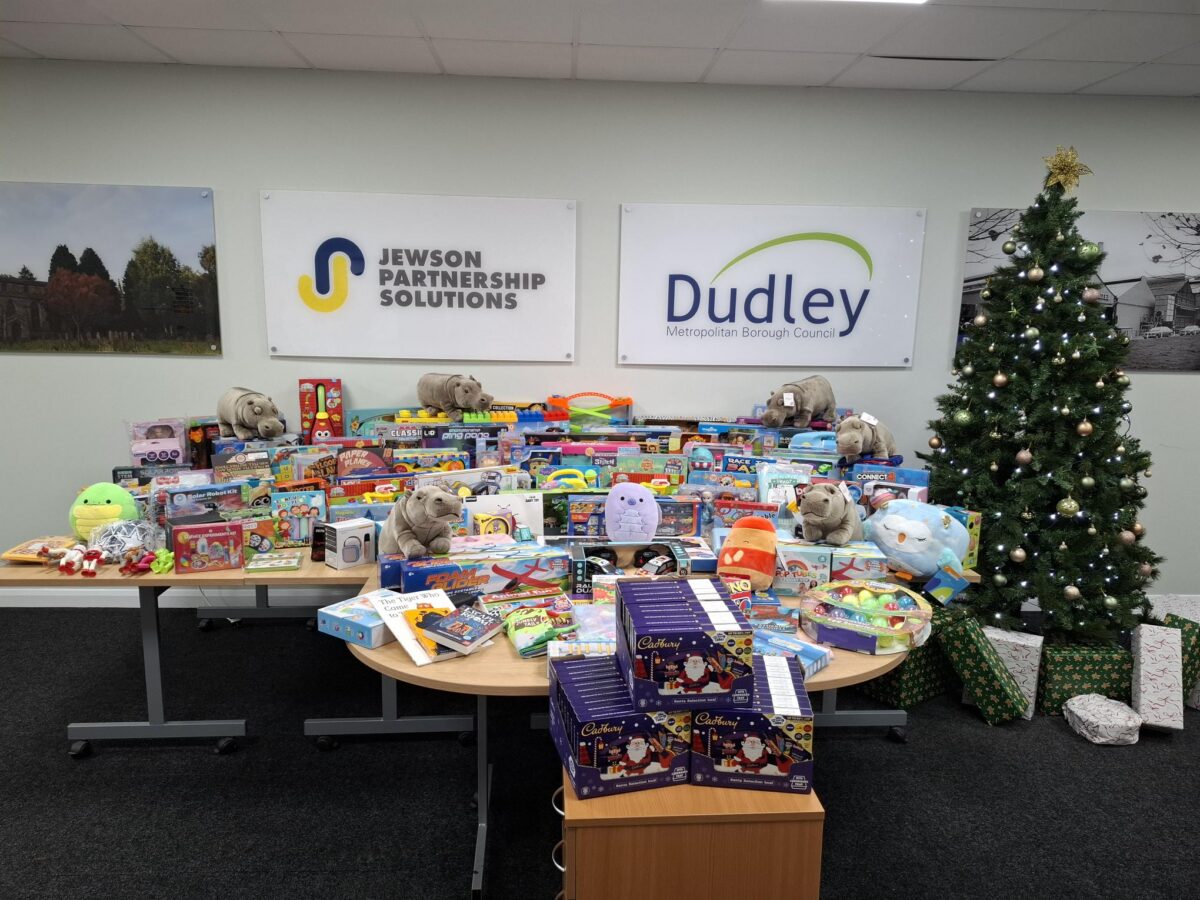
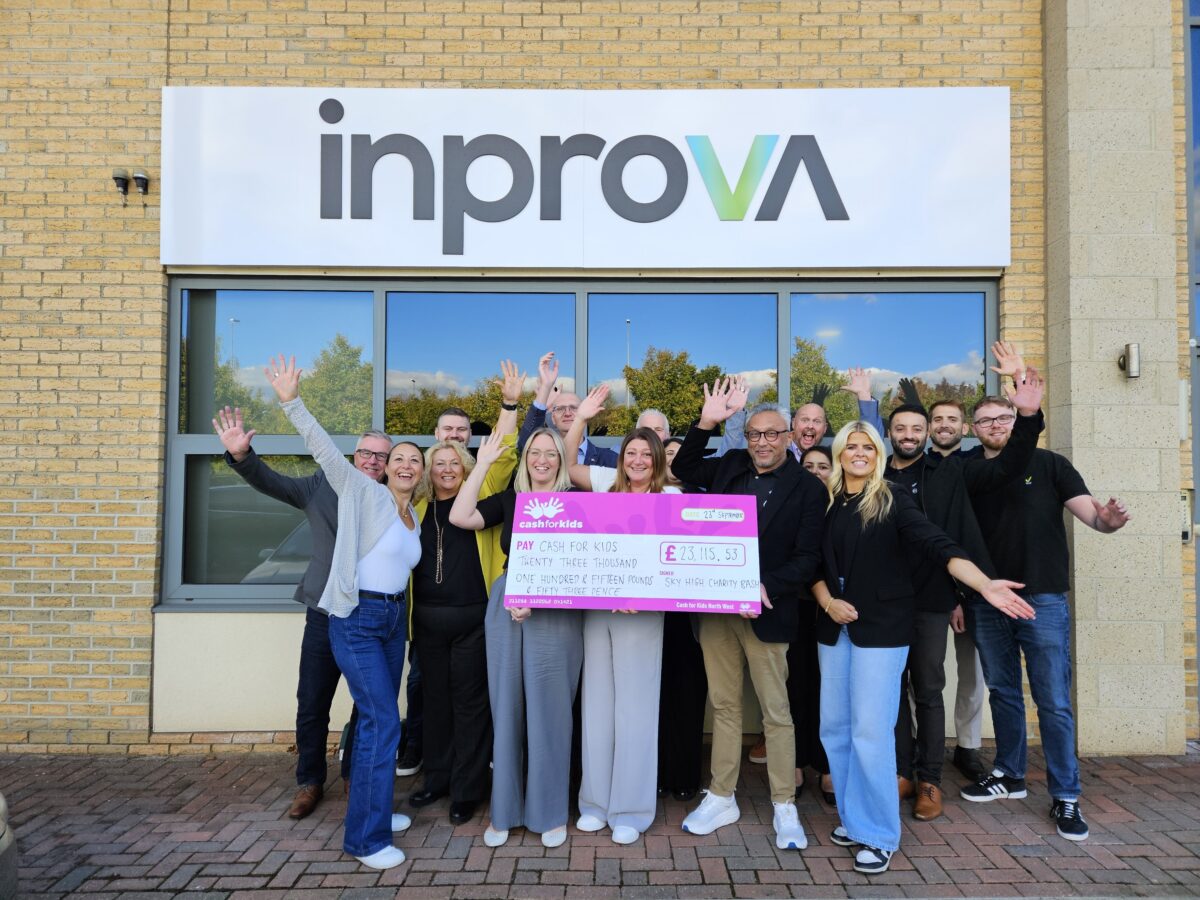
We also invest directly in the communities around us. In 2025, we contributed £205,700 to Clarion Futures for community grants and support for social housing residents. We raised £23,116 for Cash for Kids, helping 1,000 local children through the summer holidays. We also raised £1,500 for Christmas presents for children at Russells Hall Hospital in Dudley and £846 for Comic Relief and Children in Need, and we gave every player in Lymm Rugby Club’s children’s team a new kit.
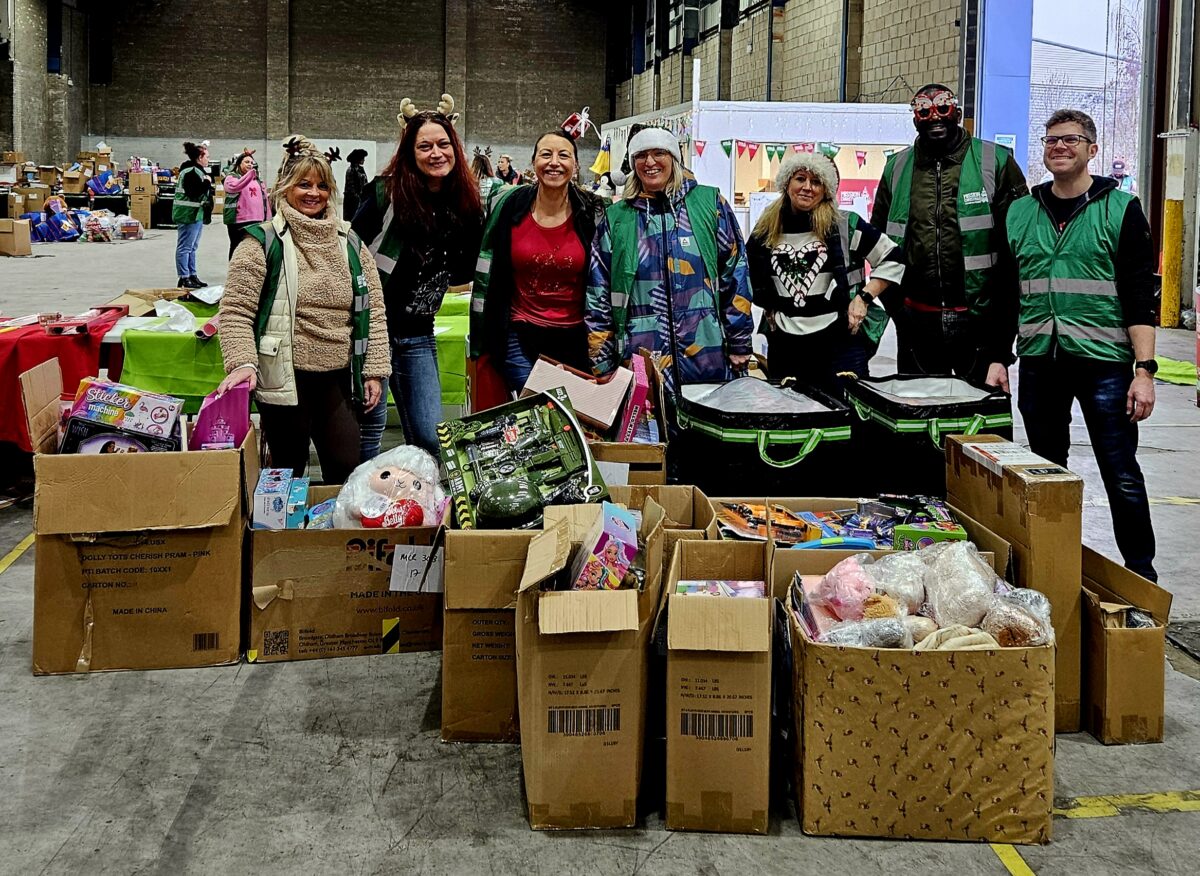
Our people gave their time as well as money. The team delivered 190 food parcels to 95 families and 12 schools for St Joseph’s Family Centre. For Cash for Kids’ Mission Christmas campaign, staff donated 70 gifts and £300, and our partners CEF and Wolseley UK added a further 30 gifts and £300. Six colleagues also spent a day wrapping presents at the campaign’s Manchester HQ.

Every purchasing decision has an environmental consequence, and procurement is one of the most powerful levers public sector organisations have for managing it.
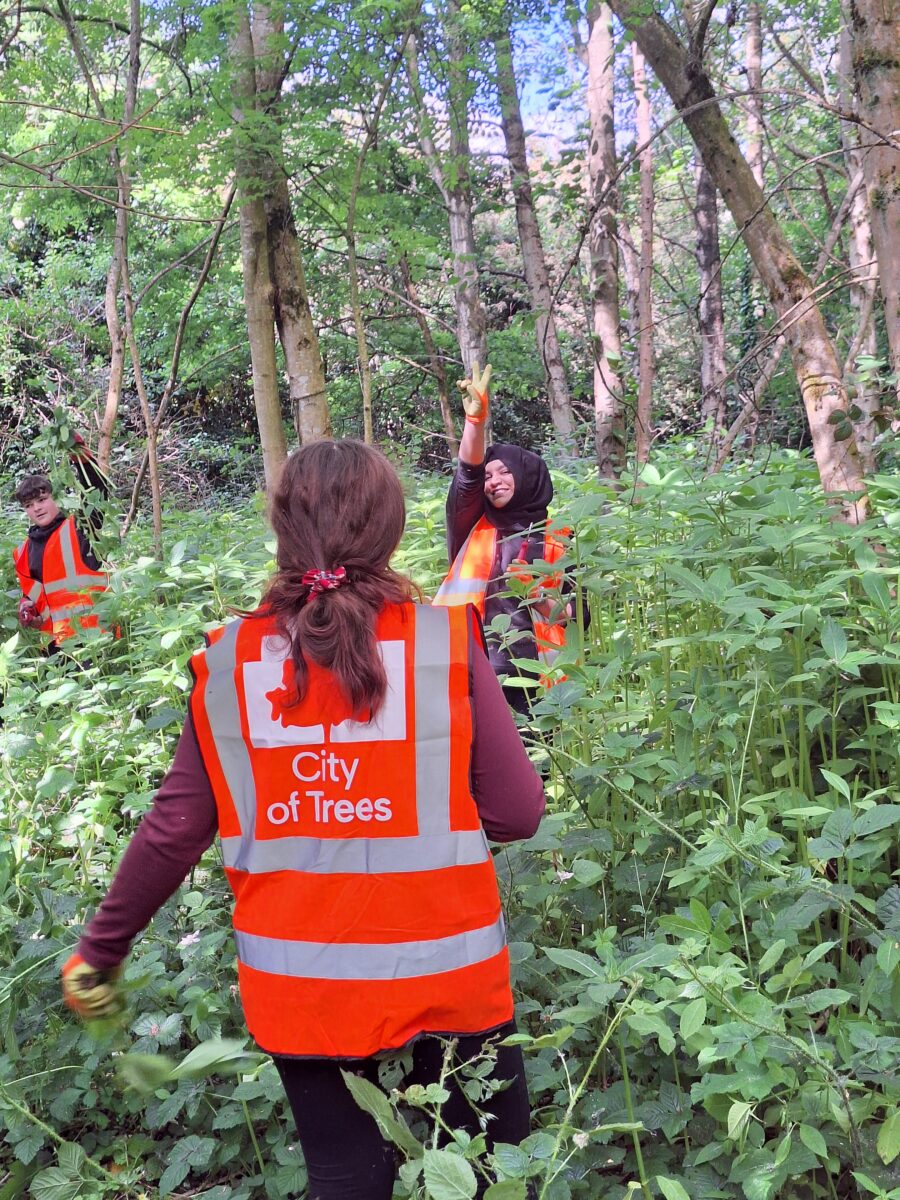
In 2025, £50.8 million of spend through Inprova went on net zero carbon solutions. In our own operations, overall emissions rose as the business grew, but we cut our carbon intensity per employee by 6%, reduced Scope 2 emissions by 11.5% through more efficient office energy use, and kept direct (Scope 1) emissions at zero for the fourth year running. Five of our people now drive electric vehicles through salary sacrifice, home-working days rose 36%, cutting commuting emissions, and we’ve increased the range of waste we recycle. Nine of our people also took part in biodiversity volunteering with City of Trees.
Our goal is to be a net zero business by 2030 and to help our customers and suppliers do the same.
For our customers, we help embed environmental requirements into procurement specifications and track delivery through Quantum. Central government contracts worth more than £5 million a year require suppliers to provide a Carbon Reduction Plan, and other public bodies can choose to apply the same approach. In the NHS, carbon reduction plan requirements already apply to procurements above standard thresholds, with a further tightening from April 2027. Scotland’s sustainable procurement duty under the Procurement Reform (Scotland) Act 2014 carries the same underlying expectation that public spend accounts for its environmental impact. We help you go beyond the minimum and use procurement as a genuine driver of environmental progress.

The biggest gap in social value delivery isn't intent, it's evidence.
Promises made in a bid submission are easy to make and easy to forget once a contract is running. Measuring our own impact has shown us how much effort it takes to evidence social value properly, and we’re putting that experience to work for our customers.
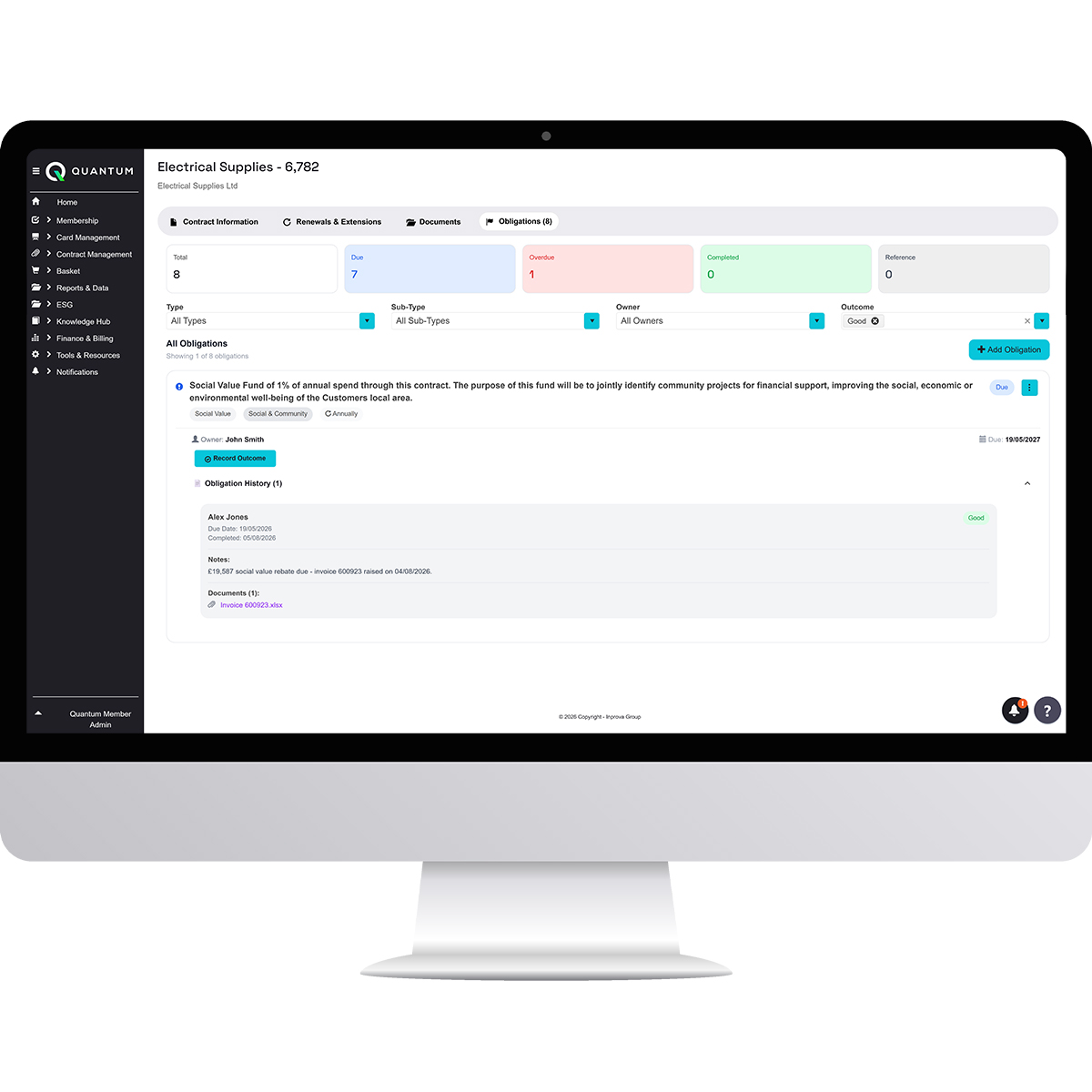
Quantum, our spend and contract management platform, brings the contracts you hold with us into one secure register. Its contract obligations framework tracks social value commitments alongside every other obligation a contract carries, from payment terms and insurance cover to KPIs. Each obligation can be assigned a named owner, and supporting evidence sits directly against the contract record, giving you a complete, auditable record of what was promised and what was delivered. When performance slips, you can assign an improvement plan and track it to resolution.
Because Quantum is built around UK public procurement requirements, including Themes, Outcomes and Measures (TOMs) and social value reporting, you can evidence the difference your spend makes to your board, your regulator and the communities you serve.

We can only ask our customers to build fair work into their supply chains if we’re getting it right ourselves. That’s why social value, for us, starts with how we treat our own people and carries through to the suppliers we bring together for the public sector.
Fair work is moving up the public sector agenda. The new central government Social Value Model puts jobs, skills and opportunities for people facing barriers to employment at its centre. Social value is a key part of our frameworks and solutions, and we expect the suppliers on them to share our commitment to fair work. That gives you a route to market where social value is already built in, not something you have to add afterwards.
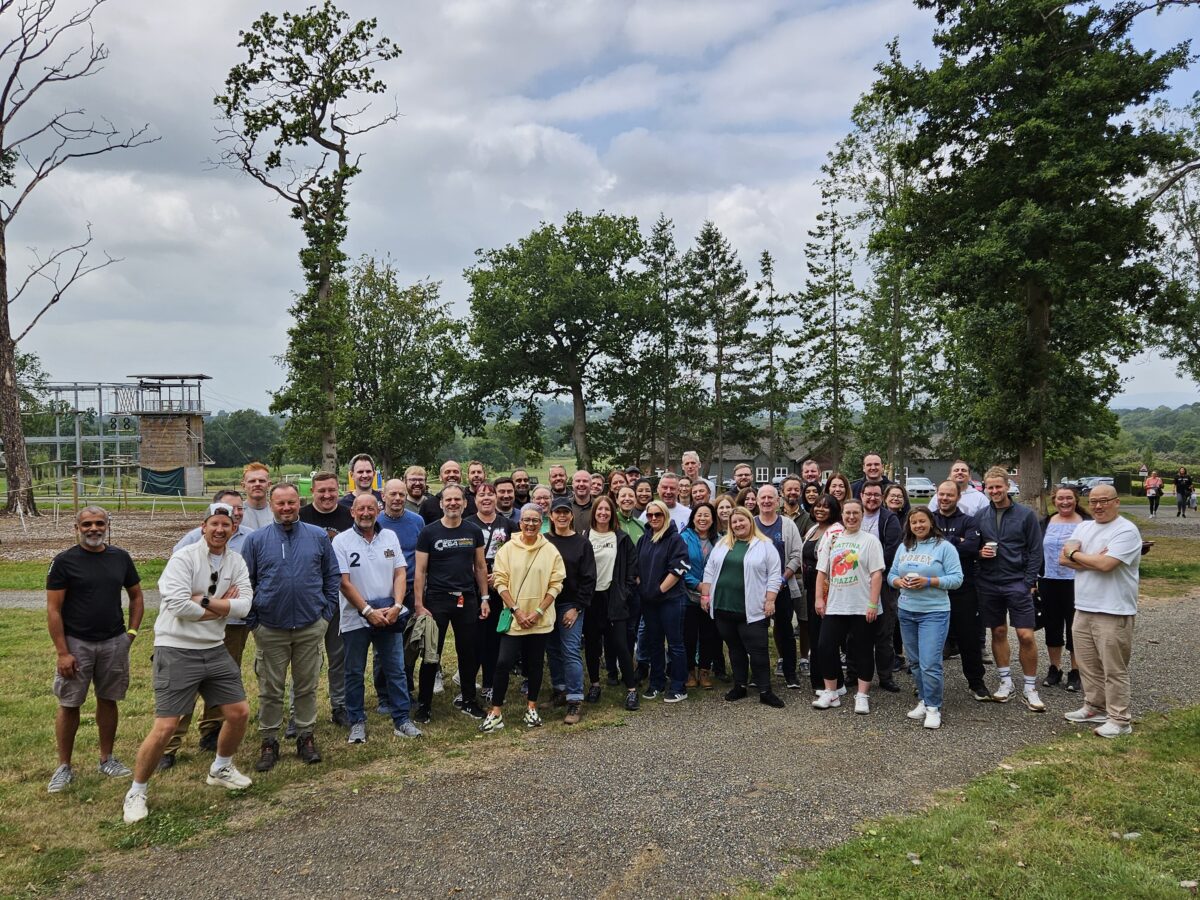
We hold ourselves to the same standard. 92% of our team are satisfied with their jobs, and 91% have confidence in our management, compared with an industry average of 74%. In 2025, we worked with an external agency on a new recruitment strategy to make hiring fairer and more inclusive. We’ve also launched an apprenticeship programme that brought four recruits into the business. Over the next two years, we plan to grow that programme further. We’ll also train mental health first aiders and give our people more paid time to volunteer for causes they care about.

Social value promised at the point of tender means little if it can't be tracked and evidenced through the life of a contract. That's a governance problem as much as a social value one, and it's why we build accountability into everything we do, for ourselves and for our customers.
In 2025 we paid 100% of our suppliers within 30 days. It’s a simple commitment with a real effect further down the supply chain, because small and medium suppliers depend on being paid on time to manage cash flow and keep employing people locally. Our own governance is independently assessed as part of our B Corp certification, and our Sustainable Development Goals are set at board level and carried through manager training, new starter induction and individual objectives. Over the coming year, we’ll carry out a full materiality assessment to set our next goals.
For our customers, this means social value commitments don’t just live in a bid submission. They’re recorded against the contracts you hold with us in Quantum’s contract obligations framework, where each obligation can be assigned a named owner. A full audit trail of every obligation and its evidence record gives your board and auditors the assurance they need, without manual collation.