Waste Management and Technical Services framework

Current Status Live
Framework End Date 30-06-2028
View all key facts

Waste management is one of the most heavily regulated and fragmented categories in the public sector, with the detail differing by nation. The Environmental Protection Act 1990 sets the core duty of care across Great Britain, with Northern Ireland’s own Waste and Contaminated Land Order imposing an equivalent duty. Hazardous waste, WEEE, and other specific waste streams are each governed by their own regulations, with a separate version in force in each UK nation. Getting it wrong carries serious consequences: enforcement action from your national environmental regulator, unlimited fines, and criminal prosecution for duty of care failures.

About our framework

For organisations managing waste across construction sites, housing maintenance, office estates, school buildings, hospital campuses, or military installations, the framework removes the need to procure and manage dozens of separate waste contractors. One framework, one managed service relationship, one set of compliance documentation, and one view of your waste data.

Waste is a category that most organisations need to manage but few have the specialist knowledge to procure well. The licensing landscape is complex: different waste streams require different permits, different disposal routes, and different documentation. A single construction project can generate general waste, hazardous materials, WEEE, and asbestos waste, each requiring a different licensed carrier and disposal facility. Across a portfolio of buildings or a programme of works, the number of waste subcontractors, transfer stations, and disposal sites quickly multiplies. The result, for many public sector organisations, is a fragmented supply chain with decentralised reporting, inconsistent pricing, and limited visibility of where waste actually ends up.

This framework was designed to solve that problem. Pre-market engagement with both customers and suppliers identified two clear needs: a managed service provider model that consolidates the fragmented waste supply chain into a single accountable relationship, and better carbon impact tracking to support net zero strategies. The framework delivers both. Suppliers on the framework act as total waste management providers, managing the full network of subcontractors, hauliers, and licensed disposal facilities across every waste stream and every region.

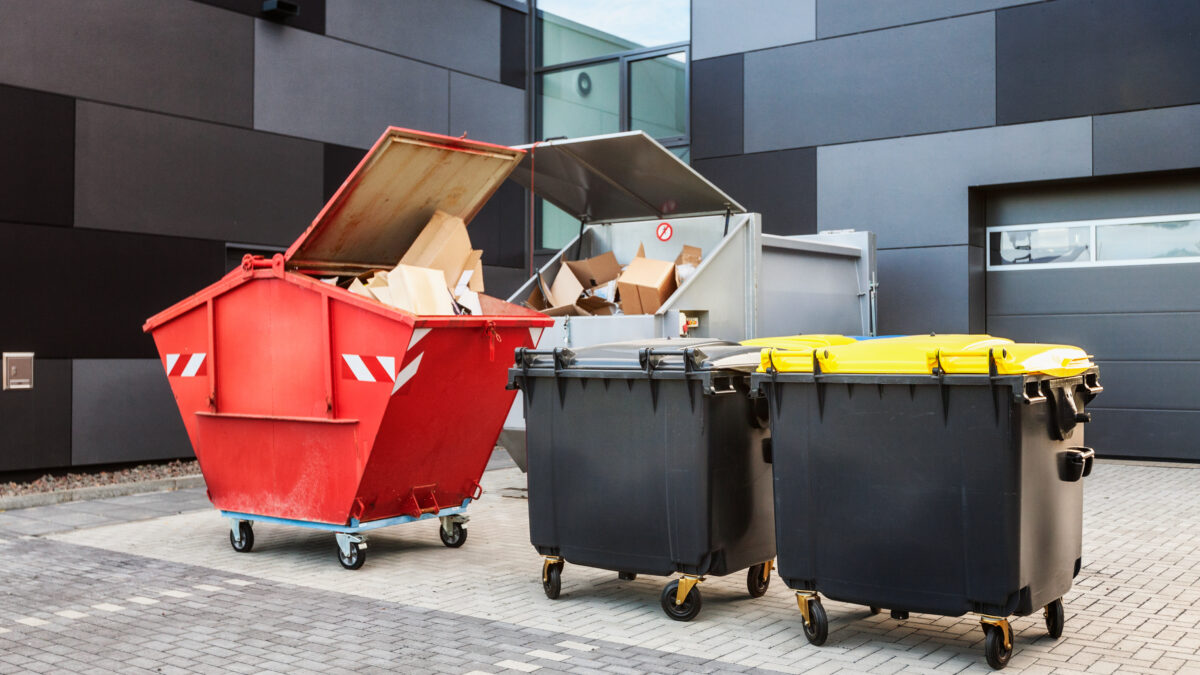
Waste management bins

What's included?

General waste collection and disposal

Skip hire, roll-on roll-off containers, front-end loader bins, rear-end loader collections, and direct tipping for general waste, mixed recyclables, timber, metal, plasterboard, and inert materials. This covers the day-to-day waste that construction projects, maintenance programmes, office buildings, and operational sites produce. Collections can be reactive (booked as needed), planned (scheduled in advance as part of a programme), or fixed-site (permanent arrangements at depots, offices, or other buildings with ongoing waste production).

Kerbside and wait-and-load collections

For locations where a skip cannot be placed, such as terraced streets, restricted access sites, or areas with parking restrictions, wait-and-load provides a vehicle that arrives at a scheduled time, is loaded on site, and leaves with the waste. This is particularly relevant for housing maintenance and responsive repairs teams who generate waste from individual properties and cannot leave skips on the public highway. It is also commonly used for bulky waste collections from residential properties.

Site clearance and fly-tipping removal

Clearance of void properties, derelict sites, garages, communal areas, and land affected by fly-tipping. Fly-tipping is a persistent problem for local authorities, housing providers, and any organisation managing open land. The framework provides a compliant route for removing illegally dumped waste, with the correct waste transfer documentation and disposal at licensed facilities. For void property clearance, the service covers the full strip-out of a property before refurbishment, including the segregation and compliant disposal of different waste types.

Hazardous waste management

Collection, transport, and disposal of hazardous waste including asbestos waste, chemicals, oils, paints, solvents, contaminated soils, and other materials classified as hazardous under the Hazardous Waste Regulations 2005. Hazardous waste requires specialist handling, licensed carriers, consignment notes, and disposal at facilities permitted to accept hazardous materials. The managed service model means the framework supplier coordinates the specialist subcontractors and documentation, so you have a single point of contact rather than managing multiple hazardous waste carriers directly.

WEEE and bulky waste

Collection and compliant disposal of Waste Electrical and Electronic Equipment, including fridges, freezers, washing machines, cookers, televisions, IT equipment, and other electrical items. WEEE is subject to specific regulations around collection, treatment, and recycling, and must be handled by Approved Authorised Treatment Facilities. Bulky waste collections also cover furniture, mattresses, and other large items from residential and commercial properties, including items containing Persistent Organic Pollutants (POPs) such as certain upholstered furniture manufactured before specific dates.

Compliance documentation and carbon reporting

Every waste movement through the framework is documented with waste transfer notes, consignment notes for hazardous waste, and disposal certificates. The suppliers provide management information and reporting that meets Environment Agency guidelines, giving you a full audit trail from collection to final disposal. The framework also includes carbon impact tracking, providing data on waste tonnage, disposal methods, diversion from landfill, and associated carbon emissions. For organisations working towards net zero targets or reporting on environmental performance, this data supports your sustainability reporting without requiring you to compile it from dozens of separate waste contractors.

Key facts at a glance

Solution Type Standard Framework Agreement
Current Status Live
FTS Tender Notice 2024/S 000-006938
Solution Term July 1, 2024 – June 30, 2028
Owner / Issuing Body Procurement for Housing
Total Lots 1
Suppliers Assigned 2
Quality / Price Split Quality 40% / Price 60%
Procurement Procedure Open procedure (PCR 2015)
Access Routes Direct award or mini-competition
Estimated Total Value £1bn

CPV codes

CPV Code 90500000 – Refuse and waste related services

Supporting documents

Contract Notice

Framework appointees

Review the list of suppliers available on this framework. See lots section below for suppliers per lot.

Showing 1-2 of 2 suppliers

Acumen Waste Services Limited
Reconomy (UK) LTD
Reconomy (UK) LTD

No suppliers found.

Framework lots

Displayed in ranked order, see buyers guide for more information

Similar & in-demand solutions

How to use this framework

Inprova works with you from the point you first identify a need, through procurement, and into ongoing contract delivery. We recommend getting in touch early so we can help you define your requirements and identify the most appropriate procurement route. You can award contracts through two routes: direct award or mini-competition. Contracts can be awarded for any duration necessary to deliver your requirements.

Once you are a customer

Our support does not stop when a contract is awarded. We work alongside you through evaluation, award, and ongoing contract management, holding suppliers to account, monitoring performance, and making sure your contract delivers what it promised. What that support looks like in practice depends on how you procured, so here's what to expect after a direct award and after a mini-competition.

Speak to our team

Our procurement specialists can help you plan a compliant route to market, review your current project or identify the right solution for your organisation.

Inprova NPS Score
noun_692985

Why use this framework?

One managed service across every waste stream and region

Compliant audit trail from collection to disposal

Carbon impact data to support your net zero reporting

Regional pricing with national coverage

Who can use this framework?

All public bodies as defined by the Public Contract Regulations 2015 and the Public Contract (Scotland) regulations 2015

Frequently asked questions