Inprova
2 Olympic Way, Woolstone Grange Avenue
Birchwood, Warrington, WA2 OYL
Inprova’s Responsive Repairs and Associated Works DPS provides a compliant procurement route for building repairs, property refurbishment, and general maintenance across the public sector. Five lots cover multi-trade responsive repairs, general repairs and joinery, plumbing and heating, electrical works, and specialist services. Contractors on the DPS can supplement your existing workforce, provide additional capacity during peak periods, or deliver a fully managed repairs service.
Every organisation that manages occupied buildings needs a reliable, responsive repairs capability. When a heating system fails in a school during term time, a pipe bursts in an occupied hospital ward, an electrical fault is reported in a police custody suite, or storm damage affects a council leisure centre, the speed and quality of the response directly affects the people using the building and the organisation’s ability to operate. For public sector organisations managing large, dispersed building portfolios, the procurement challenge is maintaining a supply chain that can respond quickly across multiple trades and geographies without compromising quality or compliance.
The pressures around responsive repairs are different depending on where you sit. NHS trusts and health boards must maintain safe clinical environments under estates guidance, such as HTM technical memoranda in England or SHTM guidance in Scotland, while coordinating repairs around patient care, infection control, and 24/7 operations. Schools and multi-academy trusts need contractors who can respond during term time without disrupting teaching, or mobilise major works within tight holiday windows, with England’s Education Estates Strategy now driving new estate management standards from autumn 2026, alongside similar capital investment programmes in Scotland, Wales, and Northern Ireland. Local authorities manage the broadest range of building types in the public sector, from offices and libraries to leisure centres and care homes, each with its own maintenance profile and risk assessment requirements. Blue light services need rapid response for operational buildings where service continuity is critical, often in historic buildings under governance scrutiny from bodies such as HMICFRS in England and Wales, HM Fire Service Inspectorate Scotland and HMICS in Scotland, or Criminal Justice Inspection Northern Ireland. Defence estate managers require contractors who can meet security clearance requirements alongside standard maintenance competence.
This DPS was designed to provide flexible capacity across all of these settings. It’s a compliant procurement route for appointing contractors who can supplement your in-house team, provide additional capacity when demand spikes, cover specific repair categories where you have gaps, or deliver a fully managed service on your behalf. The five-lot structure separates the main repair trades so you can procure exactly the capability you need. If you only need additional plumbing and heating capacity, you procure through Lot 3 without engaging general repairs contractors. If you need a full-service multi-trade contractor who can handle everything from initial response through to work completion, Lot 1 provides that end-to-end option. If you need specialist works outside the standard repair trades, Lot 5 covers the less common requirements.
The DPS is fully compliant with UK public procurement law, with new suppliers able to join at any point during its lifetime. You set your own specifications, pricing mechanisms, and contract terms for each procurement, and Inprova’s team supports you through the full process from solution design to contract award and ongoing supplier management.

Full-service responsive repairs and void works
A single contractor to deliver the full range of responsive repairs and void property refurbishment, covering general repairs, joinery, plumbing, heating, and electrical works. This lot is for organisations that want one contractor to handle everything rather than managing separate trade-specific appointments. Contractors on this lot hold both Gas Safe and NICEIC registration as a minimum, and can be required to manage the entire repairs process end to end, including taking repair requests, diagnosing problems, scheduling operatives, completing the work, and reporting back. They can also manage specialist subcontractors for tier 2 and niche works as part of their service.
General repairs and joinery
Day-to-day building repairs including door and window adjustments, lock changes, plasterwork repairs, fencing, flooring, tiling, glazing, and general joinery. These are the repairs that make up the highest volume of day-to-day maintenance requests in most property portfolios. Contractors on this lot can supplement your existing direct labour force or manage the full general repairs workstream on your behalf, including call handling, diagnostics, and scheduling.
Plumbing and heating repairs
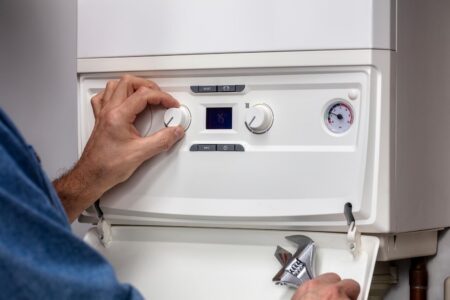
Plumbing repairs, heating system faults, boiler breakdowns, hot water system failures, radiator issues, pipe leaks, and all associated gas and water-related responsive repairs. Contractors on this lot hold Gas Safe registration as a minimum requirement. This lot also covers plumbing and heating works required to bring void properties back to a lettable standard.
Electrical repairs
Electrical fault finding, socket and switch replacements, lighting repairs, consumer unit issues, and all associated electrical responsive repairs. Contractors on this lot hold NICEIC or equivalent registration. This lot also covers electrical works in void properties, including bringing the electrical installation up to current standards where the periodic inspection report has identified deficiencies.
Specialist works
Repairs and refurbishment that fall outside the standard general, plumbing, heating, and electrical trades. This is an open category where the specific requirements are defined by you at the invitation to tender stage. It covers the less common but still essential repairs and works that most property portfolios generate, from specialist drainage and damp works to structural repairs, pest control, and other niche requirements.

Review the list of suppliers available on this dps. See lots section below for suppliers per lot.
No suppliers found.
See buyers guide for more information
Full delivery of all responsive repair’s requirements and / or completion of full voids refurbishment works. Responsive repairs are likely to comprise general repairs and joinery works, plumbing and heating works and electrical works. Qualified Contractors may be required to supplement existing direct labour, or fully manage the end-to-end process of delivering responsive repairs on behalf of members including call handling, repairs diagnostics and work scheduling. Qualified Contractors may be required to fully manage tier 2 and / or specialist works as part of their offering via the use of approved subcontractors.
Delivery of general building repairs and responsive repairs requirements and / or completion of general repairs and joinery voids refurbishment works. Qualified Contractors may be required to supplement direct labour, or fully manage the end-to-end process of delivering responsive repairs on behalf of members including call handling, repairs diagnostics and work scheduling. Qualified Contractors may be required fully manage tier 2 and / or specialist works as part of their offering via the use of approved subcontractors.
Delivery of plumbing, heating and/or gas responsive repairs requirements and / or completion of plumbing & heating voids refurbishment works. Qualified Contractors may be required to supplement direct labour, or fully manage the end-to-end process of delivering relevant responsive repairs
on behalf of members including call handling, repairs diagnostics and work scheduling. Qualified Contractors maybe required to fully manage tier 2 and / or specialist works as part of their offering via the use of approved subcontractors.
Delivery of electrical responsive repairs requirements and / or completion of electrical voids refurbishment works. Qualified Contractors may be required to supplement direct labour, or fully manage the end-to-end process of delivering relevant responsive repairs on behalf of members including call handling, repairs diagnostics and work scheduling. Qualified Contractors may be required to fully manage tier 2 and / or specialist works as part of their offering via the use of approved subcontractors.
Delivery of specialist responsive repairs requirements and / or completion of specialist voids refurbishment works. Qualified Contractors may be required to supplement direct labour, or fully manage the end-to-end process of delivering relevant responsive repairs on behalf of members including call handling, repairs diagnostics and work scheduling.
Get in touch as early as possible. The earlier we're involved, the more we can help you shape your requirements, design your specification, and build the tender documentation that gets you the right result. A DPS doesn't come with pre-agreed pricing or a fixed supplier list. You set your own pricing structure, contract terms, evaluation criteria, and specification for each procurement. That gives you control over exactly what you're buying and how it's evaluated.
Once your requirement is defined, we issue the tender to all suppliers admitted to the relevant DPS category. Suppliers submit their proposals and are evaluated against your published criteria, which typically cover relevant project experience, regional delivery capability, financial standing, insurance, health and safety track record, and current capacity. Inprova supports you through evaluation and moderation where needed, and manages the process through to contract award. Because the DPS is already established as a compliant procurement vehicle, the process is significantly faster than a standalone procurement.
A DPS stays open to new suppliers throughout its lifetime. As new contractors and specialists enter the market, or as existing businesses develop new capabilities, they can apply to join and become available for future competitions. That means the supply chain you’re choosing from today is broader than it was six months ago, and it will be broader again in another six months. For categories where the market is evolving, where local and specialist suppliers matter, or where you want genuine competition on every procurement, this is a significant advantage over a fixed supplier list.
Appointing a supplier is the start of the process, not the end of it. Whether the contract delivers what was promised depends on what happens next: whether the supplier mobilises on time, whether pricing stays where it should, and whether performance is monitored consistently through the lifetime of the agreement. Our team stays with you from the point of award through to completion, providing the category expertise, procurement authority, and ongoing supplier management that keeps your contract on track. Because every award through a DPS is made via mini-competition, here's what that process looks like from start to finish, and what continues after the contract is signed.
A DPS stays open to new suppliers throughout its lifetime, and every requirement is procured through a competitive mini-competition rather than a direct award, which means the supplier list you’re competing against reflects the current market, not just who was on the system when it launched. We develop the specification and evaluation criteria with you, issue the competition to all qualified suppliers in the relevant category, handle clarification questions, and support your team through evaluation and moderation. Because qualification has already been completed, this process moves significantly faster than a standalone tender. Contact us today to start a discussion.
After award, we don’t hand off and disappear. We provide ongoing supplier management, track performance against the commitments made at tender, and act as a knowledgeable point of contact between you and the supplier when questions or issues arise during delivery. Quantum gives you visibility of spend, pricing, and performance throughout the life of the contract, so nothing gets tracked manually or falls through the gaps. Contact us today to discuss the options available to you.
Our procurement specialists can help you plan a compliant route to market, review your current project or identify the right solution for your organisation.
Account Manager
Head of Consultancy Services
Head of Commercial
Operations Director
Sorry, we couldn’t find any team members that match your current filters.
Schools, colleges, universities, and multi-academy trusts can access the DPS for works and services across their estates.
Permissible users:
Get Information about Schools – GOV.UK (get-information-schools.service.gov.uk)
DE :: Institution Search (education-ni.gov.uk)
Parentzone Scotland | Parent Zone (education.gov.scot)
Address list of schools | GOV.WALES
Cyngor Cyllido Addysg Uwch Cymru | Higher Education Funding Council for Wales (hefcw.ac.uk)
Universities Scotland — The Voice of Scotland’s Universities (universities-scotland.ac.uk)
Further Education (FE) Colleges | nidirect
Education Authority (eani.org.uk)
Universities and colleges in Northern Ireland | nidirect
List of Universities & Colleges in the UK | Which? – The Uni Guide
Universities and Colleges in the UK
NHS trusts, integrated care boards, and other health bodies can use this framework to meet their varied procurement needs with confidence.
Permissible users:
NHS England » NHS provider directory
Organisations – Scotland’s Health on the Web
Welsh Ambulance Service NHS Trust – Home (wales.nhs.uk)
Hospice Care Finder | Hospice UK
Â
Councils manage the broadest range of building types in the public sector: offices, leisure centres, libraries, schools, depots, care homes, and civic buildings.
Permissible users:
List of council in England (publishing.service.gov.uk)
A-Z of councils online | Local Government Association
Charities and VCSE organisations managing property, including hospices, community buildings, and accommodation, can access the DPS where they meet the definition of a contracting authority under the relevant procurement legislation for their nation.
Permissible users:
About the register of charities (charitycommission.gov.uk)
Mutuals Public Register (fca.org.uk)
List of CICS – GOV.UK (www.gov.uk)
Government departments, executive agencies, and NDPBs managing office, court, prison, and specialist building estates can use the DPS as a compliant route to pre-assessed suppliers. This includes UK government bodies such as the Government Property Agency, as well as devolved government departments managing their own estates in Scotland, Wales, and Northern Ireland.
Permissible users:
Departments, agencies and public bodies – GOV.UK – GOV.UK (www.gov.uk)
Registered passenger transport services can access this framework to support their procurement and operational programmes.
Permissible users:
Home page | Urban Transport Group
Keeping London moving – Transport for London (tfl.gov.uk)
Network Rail – we run, look after and improve Britain’s railway
Police forces, fire and rescue authorities, and ambulance services can use the DPS for works and services across police stations, custody suites, fire stations, control rooms, training facilities, and operational buildings.
Permissible users:
Fire and Rescue Service List – Chief Fire Officers Association (cfoa.org.uk)
Lot 1 (full-service/multi-discipline provision) provides a single contractor who delivers responsive repairs across all trades: general repairs, joinery, plumbing, heating, and electrical. This contractor holds both Gas Safe and NICEIC registration and can manage the entire repairs process from call handling and diagnostics through to work completion and reporting. They can also manage specialist subcontractors for works that fall outside the core trades.
Lots 2 to 5 are trade-specific. Each covers a single discipline: general repairs and joinery (Lot 2), plumbing and heating (Lot 3), electrical (Lot 4), or specialist works (Lot 5). These lots are for organisations that want to procure individual trade capacity rather than a full-service solution, either to supplement an existing direct labour organisation or to fill a gap in a specific trade.
The choice depends on your delivery model. If you want a single contractor to manage everything, Lot 1 gives you single-point accountability across all trades. If you have an in-house team that handles most trades but needs additional capacity in plumbing and heating, you procure through Lot 3 alone. If you want to appoint separate specialist contractors for each trade and manage the coordination yourself, you procure through the individual lots. Many organisations use a combination, appointing a full-service contractor for one geographic area and supplementing with trade-specific contractors in another.
Yes. Across all five lots, contractors can be required to manage the end-to-end responsive repairs process, not just the physical repair work. This includes receiving and logging repair requests, diagnosing the issue and triaging the priority, scheduling operatives to attend, completing the repair, and providing management information and reporting on the work done.
This is an important option for organisations that don’t have the infrastructure or resource to operate their own repairs coordination function. An NHS trust without a dedicated estates helpdesk, a multi-academy trust without a central facilities management team, or a smaller council without the systems to manage repair workflows across multiple buildings can all benefit from a contractor who takes on the full process. A full-service contractor on Lot 1 can act as the single point of contact for building occupants reporting a repair, manage the workflow from first report to completion, and provide the performance data you need to monitor the service.
For organisations that want to retain control of coordination but outsource the physical repair work, the DPS also supports that model. You manage the front end and the contractor provides the operative. Because you set the specification and delivery model for each procurement, the DPS adapts to however you want to structure the service. Inprova’s team can advise on the advantages and trade-offs of different delivery models based on the scale of your repairs operation, the types of buildings you manage, and your internal capacity.
Many public sector organisations operate their own maintenance teams for responsive repairs but need additional contractor capacity at certain times: during peak demand periods, when the team has vacancies in a specific trade, when a particular geography is difficult to cover with in-house operatives, or when a large refurbishment programme requires more resource than the internal team can provide alongside ongoing day-to-day repairs.
This is common across every sector. An NHS trust estates team might need additional plumbing capacity during winter when heating failures spike. A multi-academy trust’s maintenance team might cover most trades but lack qualified electricians. A council might have strong in-house coverage in urban areas but struggle to service buildings in rural parts of the authority. A blue light service might need supplementary capacity while its facilities management team is restructured.
The DPS is designed for exactly these scenarios. You can procure additional capacity in a specific trade through the relevant lot without committing to a full outsourced model. The contractor supplements your in-house team rather than replacing it. You define the scope: it might be a geographic area, a volume of repair orders per week, a specific trade where you have a gap, or a time-limited period to cover seasonal peaks. Because the DPS uses competitive tendering for each procurement, you can test the market each time you need additional capacity rather than being locked into a single long-term arrangement. Inprova’s team can help you design the procurement to integrate effectively with your existing maintenance operations.
Yes. The DPS covers responsive repairs and general building maintenance for any type of occupied building. Council offices, leisure centres, libraries, community centres, care homes, depots, and civic buildings all require the same core repair trades: plumbing, heating, electrical, joinery, and general building maintenance. For councils managing education estate on behalf of maintained schools, the DPS also covers school building repairs.
Local authorities manage the broadest range of building types in the public sector, and the maintenance profile for each is different. A leisure centre with a swimming pool has different plumbing and heating demands to a Victorian library or a 1960s civic office. A care home has specific requirements around working in occupied residential settings with vulnerable people. A depot has industrial maintenance needs that don’t apply to other building types. The DPS accommodates this breadth because you set your own specification for each procurement, tailoring the requirements to the specific buildings and repair categories you need covered.
For councils going through structural change, whether that’s reorganisation into a new unitary authority in England or boundary and function changes elsewhere in the UK, the DPS provides continuity through the transition. Any successor authority created through this kind of change can continue using it without re-procurement, maintaining contractor access and service continuity during a period of significant organisational change. The DPS’s open supply chain also helps successor authorities that inherit a broader geographic area, as new regional contractors can join to reflect the expanded estate.
Lot 5 is an open category with no fixed scope. The specific requirements are defined by you at the invitation to tender stage. This means the lot can accommodate any specialist repair or refurbishment work that falls outside the standard general repairs, plumbing, heating, and electrical categories covered by Lots 1 to 4.
Common examples of specialist works procured through Lot 5 include specialist drainage surveys and remediation, damp and mould investigation and treatment, structural repairs and underpinning, pest control and vermin treatment, specialist roofing repairs, specialist glazing and security glazing, groundwork and external works, fencing and boundary treatment, and specialist cleaning including biohazard and hoarding clearance.
The flexibility of Lot 5 is particularly valuable because responsive repair services inevitably generate requirements that sit outside the core trades. Rather than procuring each specialist requirement as a standalone exercise, you can use the DPS to run a focused competition among admitted specialist contractors. Because the DPS has an open supply chain, specialist firms can join at any point, meaning the pool of available contractors for Lot 5 grows over time as new businesses are admitted.
The Ministry of Defence manages a significant portfolio of service family accommodation and single living accommodation across the UK. When military personnel are posted and properties become vacant, the accommodation needs to be turned around to a lettable standard before the next occupant arrives. Void turnaround timescales in defence accommodation are often driven by posting cycles and operational requirements, which can create compressed delivery windows.
The DPS covers void refurbishment works across all five lots. A full-service contractor on Lot 1 can manage the end-to-end void turnaround, coordinating general repairs, plumbing, heating, electrical, and specialist works into a single programme for each property. Alternatively, individual trade lots can be used to procure specific elements of the void works where your facilities management provider needs supplementary capacity in particular trades.
For the Defence Infrastructure Organisation and managing agents operating on behalf of the MOD, the DPS provides a compliant procurement route that sits alongside existing FDIS contracts. Where the primary contractor does not have capacity to meet void turnaround timescales, or where a specific geographic area has insufficient contractor coverage, the DPS provides an alternative route to evaluated contractors who can deliver the work.
Yes. NHS trusts can use the DPS for general building repairs and maintenance across their estate, covering the day-to-day repair requirements that fall outside specialist clinical engineering and medical equipment contracts. Plumbing leaks, heating faults, electrical issues, damaged doors and fixtures, and general building fabric repairs are all covered.
Healthcare buildings present specific challenges for responsive repairs. Clinical areas may need to remain operational during the repair. Infection control protocols restrict certain types of work near patient areas. Noise and dust control requirements are more stringent than in non-clinical settings. And access to some areas may be restricted to specific times of day.
Because the DPS uses competitive tendering for each procurement, you can build healthcare-specific requirements into every specification. This means contractors bid against your actual operational constraints rather than generic terms. If you need operatives who hold specific infection control training, who can work outside normal hours, or who can coordinate with ward managers around clinical schedules, these requirements go into the tender.
For NHS trusts where the estates maintenance function is managed in-house, the DPS provides the route for supplementary contractor capacity. For trusts where estates maintenance is outsourced, the DPS provides an alternative procurement route if the primary contractor does not have capacity or capability in a specific area.
At Inprova, we offer both a Responsive Repairs framework and this Responsive Repairs DPS. They serve different needs and can be used alongside each other.
The framework provides a fixed supply chain with pre-agreed pricing and ranked suppliers. You can appoint a contractor through direct award (selecting the highest-ranked supplier for your area) or mini-competition. This is typically faster for straightforward appointments where you want to get a contractor in place quickly.
The DPS has an open supply chain where new suppliers can join at any time, and you set your own pricing and contract terms for each competition. It provides more flexibility to tailor the specification, commercial model, and evaluation criteria to each specific requirement. The DPS is better suited for complex or bespoke requirements, for organisations with specific delivery model preferences, or where access to the widest possible supply chain matters.
In practice, many organisations use both. The framework might be used for a straightforward supplementary trade appointment where speed matters. The DPS might be used for a larger responsive repairs outsourcing exercise where the specification, pricing model, and contract terms need to be tailored to the organisation’s operating model. Inprova’s team can advise on which route best fits each requirement.
Yes. Police forces managing custody suites, control rooms, evidence stores, and other secure buildings can use the DPS for responsive repairs across all trades. Custody suites have specific operational requirements that affect how repairs are delivered: contractor access is controlled, work may need to be supervised, certain areas may be inaccessible at certain times, and the building must remain operational throughout.
Because the DPS uses competitive tendering for each procurement, you can include site-specific security and access requirements in the specification. Contractors bid against the actual constraints of working in your buildings, which means the pricing and methodology reflect the reality of delivering repairs in a secure environment. This is important because a contractor who prices responsive repairs based on standard access assumptions will either deliver a poor service or need to renegotiate terms once they understand the actual working conditions.
For police forces managing custody suites across multiple locations, the DPS can be used to appoint a single multi-trade contractor (Lot 1) who manages all responsive repairs across the custody estate, or to appoint trade-specific contractors for individual locations. Inprova’s post-award due diligence provides the contractor vetting that police organisations require before allowing access to secure premises.
School building repairs present a specific scheduling challenge. Most repair work in occupied schools needs to be planned around the school day, with noisy, disruptive, or access-intensive work scheduled for evenings, weekends, or school holidays where possible. Emergency repairs, such as heating failures in winter or plumbing emergencies, cannot wait for the holidays and need to be managed with minimal disruption to teaching.
The DPS provides the procurement route for appointing contractors who understand these constraints. When you run a competition through the DPS, you can include requirements around out-of-hours working capability, appropriately vetted operatives for working in school environments, DBS-checked in England and Wales, PVG-checked in Scotland, or AccessNI-checked in Northern Ireland, noise and disruption management, and the ability to coordinate with school business managers around the academic calendar.
For multi-academy trusts managing dozens of school buildings, the DPS provides a consistent procurement route for repairs across the estate. Rather than each school arranging its own ad-hoc repairs through local tradespeople, the trust can appoint evaluated contractors through a compliant process, with specifications that reflect the specific requirements of working in school environments. This delivers consistent quality, competitive pricing, and the compliance assurance that trust boards expect. Inprova’s team can support MATs in structuring a responsive repairs procurement that works across a geographically dispersed school portfolio.
Responsive repairs is one of the most performance-sensitive procurement categories because the quality of the service is measured by speed, first-time fix rates, and the experience of the people reporting the repair. When you procure through the DPS, you define the KPIs and performance standards in your specification, and these become the contractual basis against which the contractor is held accountable.
Typical KPIs for responsive repairs contracts include response times by priority category (emergency, urgent, routine), first-time fix rates, appointment slot availability, customer satisfaction scores, right-first-time completion rates, and recall rates. These should be measurable, reportable, and linked to contractual consequences where performance consistently falls below the agreed standard.
Inprova’s post-award contract management support includes monitoring contractor performance against these KPIs, identifying trends and patterns that indicate emerging problems, and working with both you and the contractor to address performance issues before they become systemic. For organisations managing repairs through Quantum, performance data sits alongside spend information and contract documentation in a single platform, giving you a consolidated view of how the service is performing without relying on contractor-provided reports.
For organisations where repairs performance is reported to boards, elected members, or regulators, having independently verifiable performance data through Inprova’s contract management is a practical benefit that goes beyond just having access to a supply chain.
Switching responsive repairs contractors is one of the most operationally sensitive procurement exercises because the service cannot stop while the transition happens. Outstanding repair orders need to be transferred or completed. Work in progress needs to be managed to completion by the outgoing contractor or picked up by the incoming one. Access arrangements, keys, security passes, and property data need to be handed over. And the new contractor needs to mobilise their workforce, systems, and supply chain before they can start delivering the service.
When you procure a responsive repairs contract through the DPS, Inprova’s team can support you with the mobilisation planning that makes transitions work. This includes advising on the contract terms that govern the outgoing contractor’s obligations during the handover period, developing a mobilisation plan with the incoming contractor that covers workforce deployment, IT system integration, and communication with building occupants, and managing the overlap period where both contractors may be active.
The specification for each DPS procurement can include specific mobilisation requirements, including the incoming contractor’s proposed approach to transition planning, their timeline for reaching full operational capacity, and their method for absorbing outstanding repair orders from the previous contractor. Evaluating contractors on their mobilisation capability alongside their service delivery approach ensures that the transition is planned before the contract is awarded, not managed reactively once the old contract expires.
Yes. Damp and mould in any occupied building is a health hazard regardless of the sector. Building managers across the public sector have a duty of care to investigate and address it. In schools, damp and mould affects indoor air quality and can exacerbate conditions like asthma in children. In hospitals, it poses infection control risks in clinical environments. In council offices, leisure centres, and community buildings, it creates unhealthy working conditions and can cause long-term structural damage if left untreated. In older buildings across the blue light and defence estate, moisture ingress through deteriorating building fabric is a common and recurring maintenance challenge.
Damp and mould investigation and remediation can be procured through the DPS in two ways. For routine cases where the cause is a straightforward maintenance issue, such as a leaking gutter, failed pointing, damaged render, or inadequate ventilation, the relevant trade lot covers the repair. Lot 2 (general repairs) covers building fabric repairs, Lot 3 (plumbing and heating) covers plumbing-related moisture sources, and Lot 4 (electrical) covers the installation of mechanical ventilation systems.
For more complex cases requiring specialist investigation, diagnosis, and multi-trade remediation, Lot 5 (specialist works) provides the route for procuring specialist damp surveyors, mould remediation contractors, and environmental consultants. You define the specific requirements at the tender stage. For organisations managing buildings where damp and mould has been identified as a systemic issue rather than an isolated case, Inprova’s team can help you design a procurement approach that addresses both the immediate remediation and the longer-term programme of preventative works.
Responsive repairs and planned refurbishment are operationally different activities even though they involve the same trades. Responsive repairs are reactive, triggered by a fault report from a building occupant, and need to be completed within defined response times while the building remains occupied. Planned refurbishment is scheduled work carried out to improve, upgrade, or restore a building or part of a building to a required standard, typically coordinated as a programme rather than individual reactive jobs.
The DPS covers both, and all five lots can be used for either responsive repairs or planned refurbishment works. The distinction is in the specification and delivery model rather than the procurement route. A responsive repairs contract typically specifies response times, appointment windows, first-time fix targets, and the ability to handle a continuous flow of individual repair orders. A planned refurbishment contract typically specifies a schedule of works, a delivery timeline, and quality standards for the finished result.
Some organisations procure both through the same contractor, particularly when using Lot 1 (full-service), because the contractor is already familiar with the building portfolio and can coordinate between reactive and planned workstreams. Others procure them separately, using trade-specific lots for responsive repairs and Lot 1 or Lot 5 for larger refurbishment programmes. The right approach depends on the volume and complexity of the planned works, the delivery timeline, and how your organisation manages the relationship between day-to-day maintenance and capital improvement. Inprova’s team can advise on the most effective structure for your specific situation.
Yes. Hospices, community centres, places of worship, charity shops, and other charity-managed buildings all need responsive repairs, and the DPS is available to any organisation that meets the definition of a contracting authority under the Procurement Act 2023. Many charities that are substantially publicly funded or that exercise public functions qualify as contracting authorities, including hospices receiving NHS commissioning income and charities delivering contracted public services.
For smaller charities, the challenge with responsive repairs is not knowing what needs fixing. It is finding reliable, competitively priced contractors quickly when something goes wrong, without the time and expertise to run a formal procurement. The DPS solves this by providing a pre-established, compliant procurement vehicle with an open supply chain. Inprova manages the competitive process, carries out due diligence on the winning contractor, and provides post-award support.
For hospices specifically, the repairs service needs to work around clinical operations and the comfort of patients and families. Noisy or disruptive work needs to be scheduled sensitively. Contractors need to understand the environment they are working in. When you procure through the DPS, you can include these requirements in the specification so that contractors bid against the reality of working in a hospice rather than treating it as a standard building. If you are unsure whether your charity qualifies to use the DPS, contact Inprova’s team and we can confirm eligibility quickly.
The Government Property Agency manages the majority of general-purpose office space across central government. Individual departments also manage specialist estates directly. In both cases, responsive building repairs are a continuous operational requirement: heating faults, plumbing issues, electrical problems, damaged fixtures, and general building fabric maintenance all need addressing to keep government offices functional and safe for the civil servants working in them.
The DPS provides an alternative or supplementary route to the FM contractors that typically deliver building maintenance in government offices. Where the primary FM contractor does not have capacity to meet demand, where a specific trade is underperforming, or where a department wants to test the market for a specific building or portfolio, the DPS gives procurement teams a compliant route to additional contractor capacity.
Because the DPS uses competitive tendering for each procurement, departments can set specifications and evaluation criteria that reflect their specific requirements, including security clearance levels for contractors working in government buildings, out-of-hours working capability for buildings that operate beyond standard office hours, and the Procurement Act 2023’s lower central government reporting threshold of £12,000. Inprova’s team manages the procurement process and provides the post-award contract management that supplements the department’s own FM governance. For departments seeking to demonstrate value for money in their property maintenance spend as part of the Spending Review efficiency programme, having competitively tested pricing through the DPS provides the evidence base that auditors expect.
Emergency repairs are time-critical regardless of the building type, but what constitutes an emergency and what response time is acceptable varies by sector and setting. A heating failure in a school during winter term needs a same-day response because children cannot learn in a cold building. A burst pipe in an occupied hospital ward needs an immediate response because it threatens patient safety and clinical operations. An electrical fault in a police custody suite needs urgent attention because the building must remain operational and safe for detained persons. A gas leak in any occupied building is an immediate life-safety issue.
When you procure responsive repairs through the DPS, you define the response time categories and the associated target times in your specification. Typical structures include emergency (attendance within 2 to 4 hours), urgent (attendance within 24 hours), and routine (attendance within a defined number of working days). The contractor bids against these targets, and they become contractual KPIs against which performance is monitored. Because the DPS uses competitive tendering for each procurement, you can set response time requirements that reflect the operational realities of your specific buildings rather than accepting generic service levels. An NHS trust might require 2-hour emergency response for clinical buildings but accept 4 hours for administrative offices. A multi-academy trust might require same-day response during term time but accept longer timescales during holidays. Inprova’s post-award contract management tracks actual response times against these targets through Quantum, giving you evidence-based performance data rather than relying on the contractor’s own reporting.
Under the Procurement Act 2023, contracting authorities must have regard to the importance of maximising public benefit when carrying out procurements. For responsive repairs contracts, social value is particularly relevant because the workforce delivering the service operates in local communities every day. The social value opportunities are tangible and measurable: local employment, apprenticeships, training and upskilling, investment in the local supply chain, and environmental improvements in how the service is delivered.
When you procure through the DPS, you set your own evaluation criteria for each competition, which means you control how social value is weighted and what you ask contractors to commit to. A council might prioritise local employment and apprenticeships in an area with high youth unemployment. An NHS trust might prioritise carbon reduction in fleet operations and materials sourcing. A multi-academy trust might prioritise work experience placements for students. Because each competition is a standalone evaluation, you can tailor the social value requirements to the specific priorities of your organisation and locality rather than accepting generic commitments.
After award, the social value commitments made at tender need to be tracked through delivery. This is where many responsive repairs contracts fall down: ambitious social value promises are made in the bid and quietly forgotten once the contract is live. Quantum tracks social value obligations alongside contract performance, spend, and KPIs, creating a structured evidence base that ensures commitments are delivered and evidenced rather than lost. For organisations reporting social value delivery to boards, regulators, or elected members, this is practical accountability that goes beyond a line in a tender submission.