Inprova
2 Olympic Way, Woolstone Grange Avenue
Birchwood, Warrington, WA2 OYL
Inprova’s Compliance Services and Associated Works DPS covers 17 categories of building compliance, from electrical testing and heating servicing to legionella management, asbestos removal, lift installation, fire safety, and access control. Every organisation that manages buildings has legal obligations to keep them safe, and this DPS provides a single compliant procurement route for the specialist contractors who deliver that work. New suppliers can join at any time, keeping the supply chain competitive and current. You set your own pricing, contract terms, and evaluation criteria for each procurement, and Inprova’s team supports you from solution design through to contract award and ongoing supplier management.
Building compliance is not optional. Electrical testing, gas and heating servicing, fire safety systems, legionella risk assessment, asbestos management, and lift maintenance are all legal requirements for any organisation that owns or manages occupied buildings. The consequences of non-compliance range from regulatory enforcement and fines to criminal prosecution, and in the most serious cases, to harm. But the regulatory framework, the scrutiny, and the operational constraints are different depending on where you sit.
NHS trusts in England must deliver compliance works under HTM technical memoranda, including HTM 06-01 for electrical services, HTM 03-01 for heating and ventilation, HTM 04-01 for water systems and legionella management, and HTM 05-02 for fire safety; NHS Scotland follows its own Scottish Health Technical Memoranda series, with NHS Wales and Health and Social Care in Northern Ireland each setting equivalent estates guidance. CQC inspects compliance as part of its safe domain in England, with Healthcare Improvement Scotland performing the equivalent role in Scotland, Healthcare Inspectorate Wales covering NHS and independent healthcare in Wales, Care Inspectorate Wales covering social care there, and the RQIA performing the equivalent role in Northern Ireland, and failings can affect an organisation’s overall rating. All of this must be delivered in occupied clinical environments where patient safety, infection control, and service continuity constrain how and when work can happen. Schools, colleges, and universities in England face the Building Safety Act 2022 alongside DfE estate management standards arriving from autumn 2026, with equivalent building safety legislation and estate management guidance in Scotland, Wales, and Northern Ireland, and compliance works that often need to be delivered within tight holiday windows or around SEND provision. Local authorities manage the broadest range of building types of any public sector organisation, from offices and libraries to leisure centres and care homes, each with its own compliance profile and risk assessment requirements, whether under the Regulatory Reform (Fire Safety) Order 2005 in England and Wales, the Fire (Scotland) Act 2005, or the Fire and Rescue Services (Northern Ireland) Order 2006. Blue light services are managing compliance in historic, sometimes listed, buildings while subject to governance and value for money inspection from bodies such as HMICFRS, which covers policing across England, Wales, and Northern Ireland, and fire and rescue services in England, HM Fire Service Inspectorate Scotland and HMICS in Scotland, or Criminal Justice Inspection Northern Ireland for fire and rescue services there. Defence estate compliance must meet MOD-specific standards alongside public procurement law, often with security clearance requirements for contractors accessing sensitive sites.
This DPS was designed around that breadth. It brings 17 categories of compliance services into a single compliant procurement vehicle, covering everything from routine boiler servicing and electrical testing through to specialist services like legionella treatment, licensed asbestos removal, and radon monitoring. The open supply chain means new contractors can join at any point, ensuring you have access to the most current and competitive supply base in each specialist category. Inprova’s team provides complete assistance from solution design through to contract award and ongoing management. This includes developing specifications, managing the competitive process, carrying out due diligence checks on winning bidders, and providing post-award supplier management that keeps your compliance programme on track. For organisations managing large, dispersed property portfolios where compliance obligations span multiple categories and hundreds of buildings, this wraparound support is where the DPS delivers value beyond just access to suppliers.

Heating servicing and maintenance
Annual boiler servicing, central heating system maintenance, oil, LPG, solid fuel, and biomass system servicing, gas safety checks, and repair works. This category also covers renewable heating systems including air source heat pumps, ground source heat pumps, and solar thermal. For any organisation with gas appliances in its buildings, annual gas safety inspections are a legal requirement. This category provides the procurement route for the engineers who carry out that work and maintain the heating systems year-round.
Electrical testing and maintenance
Periodic electrical inspection and testing (EICR), portable appliance testing (PAT), fixed wiring testing, emergency lighting testing, and maintenance of electrical systems across domestic, commercial, and renewable installations. Electrical testing is one of the highest-volume compliance activities and produces the inspection reports that regulators and insurers require as evidence that your buildings are electrically safe.
Access control
Door entry systems, automatic opening doors, security barriers, gates, and all associated installation, servicing, and maintenance. Access control sits at the intersection of security and safety, and maintaining these systems is essential for controlling who enters buildings and ensuring emergency egress routes function correctly.
Fire risk assessments
Fire risk assessments for domestic and commercial buildings, including the periodic reviews and updates that the Regulatory Reform (Fire Safety) Order 2005 requires. A competent fire risk assessment is the foundation of every fire safety management plan, and the findings drive the specification for fire safety works across your portfolio.
Sprinkler systems
Design, installation, replacement, servicing, and maintenance of sprinkler systems, foam suppression, water deluge systems, and associated products. Sprinkler systems are increasingly mandated in certain building types and are a key component of fire safety strategies for taller buildings and buildings where occupants may have limited mobility.
Fire doors
Supply and installation of fire door sets, cupboard doors, and all associated making good works. Fire doors are one of the most frequently replaced fire safety components, and the quality of both the product and the installation directly affects fire performance. This category sits alongside the Fire Safety Works framework, which offers additional fire door procurement routes through specialist lots.
Emergency lighting and fire equipment
Smoke detectors, heat detectors, fire alarm systems, dry and wet risers, lightning conductors, and all associated design, installation, servicing, and maintenance. These are the detection and warning systems that provide early notification of fire and the infrastructure that supports firefighting operations.
Passive fire protection
Compartmentation, fire-stopping, and remedial works to restore the passive fire protection measures built into the structure of your buildings. If intrusive surveys or fire risk assessments have identified breaches in compartmentation or failed fire-stopping, this category provides the procurement route for the specialist contractors who carry out the remediation.
Asbestos surveying and testing
Management surveys, refurbishment and demolition surveys, bulk sampling, air monitoring, and all associated laboratory analysis. Asbestos surveying is a legal requirement before any refurbishment or demolition work on buildings constructed before the year 2000, and management surveys are required as part of the ongoing duty to manage asbestos in non-domestic buildings.
Asbestos removal
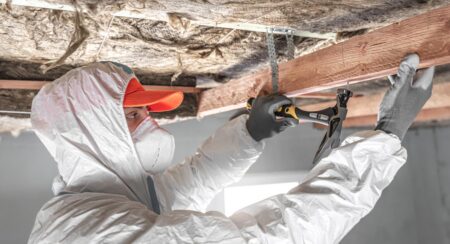
Licensed and non-licensed asbestos removal, encapsulation, and disposal. Licensed asbestos removal is one of the most heavily regulated construction activities, and the contractors who carry it out must hold an HSE licence. This category provides the procurement route for both licensed removal and the lower-risk non-licensed work that is more common in routine maintenance and refurbishment.
Mansafe systems
Guard rails, roof anchors, demarcation systems, and fall protection equipment for safe access to roofs and elevated areas. Any building where maintenance workers, window cleaners, or inspection engineers need to access the roof requires mansafe systems that comply with the Work at Height Regulations 2005.
Lift installation
Passenger lifts, cargo lifts, platform lifts, and all associated installation works for both high-rise and low-rise buildings. Lift installation is a specialist category requiring contractors with the engineering capability, insurance, and accreditation to design and install lifting equipment that meets the Lifting Operations and Lifting Equipment Regulations (LOLER).
Lift servicing and maintenance
Servicing, maintenance, and thorough examination of passenger lifts, cargo lifts, stairlifts, and platform lifts. LOLER requires regular thorough examination of all lifting equipment, and routine servicing keeps lifts operational, safe, and compliant. For organisations managing buildings with multiple lifts, the servicing contract is a significant ongoing commitment.
Legionella testing
Legionella risk assessments and water sampling across hot and cold water systems, air conditioning systems, cooling towers, spa pools, humidifiers, emergency showers, eye wash stations, and swimming pools. Legionella risk assessment is a legal requirement under the Health and Safety at Work Act and the Control of Substances Hazardous to Health Regulations (COSHH), and must be reviewed at least every two years or when changes to the water system occur.
Legionella treatment
Water treatment, temperature management, system cleaning, disinfection, and ongoing water hygiene management across the same range of water systems covered by the testing category. Where a legionella risk assessment identifies risk, treatment is required to bring the water system into compliance and maintain it there.
Japanese knotweed and invasive plants
Surveying, treatment, and removal of Japanese knotweed and other invasive plant species. Japanese knotweed is a legal liability for property owners because it can cause structural damage and affects property value. Treatment programmes typically run over multiple years and require specialist herbicide application and monitoring.
Radon testing and monitoring
Radon gas testing, monitoring, and the installation of mitigation measures where radon levels exceed the action level. Radon is a naturally occurring radioactive gas that enters buildings from the ground and is the second leading cause of lung cancer in the UK. Testing is recommended for all buildings in radon-affected areas, and mitigation is required where levels exceed the action level of 200 becquerels per cubic metre.

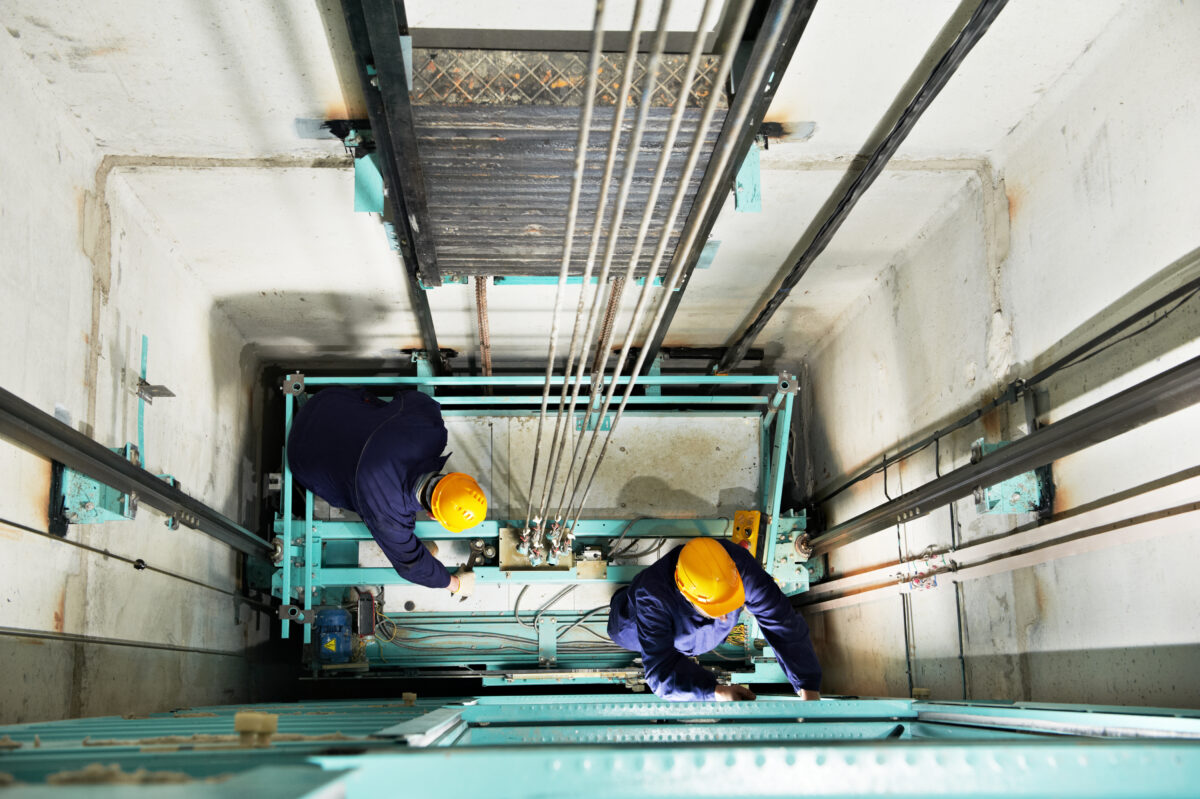
Review the list of suppliers available on this dps. See lots section below for suppliers per lot.
No suppliers found.
See buyers guide for more information
Covers regular servicing, inspection, repair and maintenance of heating systems (e.g. boilers, heat pumps, distribution pipework) to ensure safe, efficient and compliant operation across residential, communal or commercial properties.
Includes periodic electrical testing, inspection, remedial repair work, fixed wiring tests (EICRs), safety certification and ongoing maintenance of electrical systems to ensure compliance with regulations and safety standards.
Supply, installation, servicing and maintenance of systems controlling building access, such as entry systems, door controllers, intercoms, biometric/secure entry, and remote access systems.
Provision, testing, inspection and minor repair of fire safety systems – including fire alarms, smoke detectors, fire doors, fire suppression systems, fire compartmentation, emergency lighting, and fire safety compliance support.
Surveying and testing of asbestos in buildings. This includes asbestos risk assessment, lab testing, and ongoing compliance checks.
Removal, remediation and monitoring of asbestos in buildings. This includes asbestos safe removal works, encapsulation and disposal.
Survey, management, containment, removal and remediation of invasive plant species (notably Japanese knotweed) and associated site works to prevent re-infestation.
Testing, measurement and mitigation works for radon gas in buildings including sniff tests, long-term monitoring, installation of radon mitigation systems (e.g. ventilation, barriers) and reporting.
Get in touch as early as possible. The earlier we're involved, the more we can help you shape your requirements, design your specification, and build the tender documentation that gets you the right result. A DPS doesn't come with pre-agreed pricing or a fixed supplier list. You set your own pricing structure, contract terms, evaluation criteria, and specification for each procurement. That gives you control over exactly what you're buying and how it's evaluated.
Once your requirement is defined, we issue the tender to all suppliers admitted to the relevant DPS category. Suppliers submit their proposals and are evaluated against your published criteria, which typically cover relevant project experience, regional delivery capability, financial standing, insurance, health and safety track record, and current capacity. Inprova supports you through evaluation and moderation where needed, and manages the process through to contract award. Because the DPS is already established as a compliant procurement vehicle, the process is significantly faster than a standalone procurement.
A DPS stays open to new suppliers throughout its lifetime. As new contractors and specialists enter the market, or as existing businesses develop new capabilities, they can apply to join and become available for future competitions. That means the supply chain you’re choosing from today is broader than it was six months ago, and it will be broader again in another six months. For categories where the market is evolving, where local and specialist suppliers matter, or where you want genuine competition on every procurement, this is a significant advantage over a fixed supplier list.
Appointing a supplier is the start of the process, not the end of it. Whether the contract delivers what was promised depends on what happens next: whether the supplier mobilises on time, whether pricing stays where it should, and whether performance is monitored consistently through the lifetime of the agreement. Our team stays with you from the point of award through to completion, providing the category expertise, procurement authority, and ongoing supplier management that keeps your contract on track. Because every award through a DPS is made via mini-competition, here's what that process looks like from start to finish, and what continues after the contract is signed.
A DPS stays open to new suppliers throughout its lifetime, and every requirement is procured through a competitive mini-competition rather than a direct award, which means the supplier list you’re competing against reflects the current market, not just who was on the system when it launched. We develop the specification and evaluation criteria with you, issue the competition to all qualified suppliers in the relevant category, handle clarification questions, and support your team through evaluation and moderation. Because qualification has already been completed, this process moves significantly faster than a standalone tender. Contact us today to start a discussion.
After award, we don’t hand off and disappear. We provide ongoing supplier management, track performance against the commitments made at tender, and act as a knowledgeable point of contact between you and the supplier when questions or issues arise during delivery. Quantum gives you visibility of spend, pricing, and performance throughout the life of the contract, so nothing gets tracked manually or falls through the gaps. Contact us today to discuss the options available to you.
Our procurement specialists can help you plan a compliant route to market, review your current project or identify the right solution for your organisation.
Account Manager
Head of Consultancy Services
Head of Commercial
Operations Director
Sorry, we couldn’t find any team members that match your current filters.
Schools, colleges, universities, and multi-academy trusts can access the DPS for works and services across their estates.
Permissible users:
Get Information about Schools – GOV.UK (get-information-schools.service.gov.uk)
DE :: Institution Search (education-ni.gov.uk)
Parentzone Scotland | Parent Zone (education.gov.scot)
Address list of schools | GOV.WALES
Cyngor Cyllido Addysg Uwch Cymru | Higher Education Funding Council for Wales (hefcw.ac.uk)
Universities Scotland — The Voice of Scotland’s Universities (universities-scotland.ac.uk)
Further Education (FE) Colleges | nidirect
Education Authority (eani.org.uk)
Universities and colleges in Northern Ireland | nidirect
List of Universities & Colleges in the UK | Which? – The Uni Guide
Universities and Colleges in the UK
NHS trusts, integrated care boards, and other health bodies can use this framework to meet their varied procurement needs with confidence.
Permissible users:
NHS England » NHS provider directory
Organisations – Scotland’s Health on the Web
Welsh Ambulance Service NHS Trust – Home (wales.nhs.uk)
Hospice Care Finder | Hospice UK
Councils manage the broadest range of building types in the public sector: offices, leisure centres, libraries, schools, depots, care homes, and civic buildings.
Permissible users:
List of council in England (publishing.service.gov.uk)
A-Z of councils online | Local Government Association
Charities and VCSE organisations managing property, including hospices, community buildings, and accommodation, can access the DPS where they meet the definition of a contracting authority under the relevant procurement legislation for their nation.
Permissible users:
About the register of charities (charitycommission.gov.uk)
Mutuals Public Register (fca.org.uk)
List of CICS – GOV.UK (www.gov.uk)
Government departments, executive agencies, and NDPBs managing office, court, prison, and specialist building estates can use the DPS as a compliant route to pre-assessed suppliers. This includes UK government bodies such as the Government Property Agency, as well as devolved government departments managing their own estates in Scotland, Wales, and Northern Ireland.
Permissible users:
Departments, agencies and public bodies – GOV.UK – GOV.UK (www.gov.uk)
Registered passenger transport services can access this framework to support their procurement and operational programmes.
Permissible users:
Home page | Urban Transport Group
Keeping London moving – Transport for London (tfl.gov.uk)
Network Rail – we run, look after and improve Britain’s railway
Police forces, fire and rescue authorities, and ambulance services can use the DPS for works and services across police stations, custody suites, fire stations, control rooms, training facilities, and operational buildings.
Permissible users:
Fire and Rescue Service List – Chief Fire Officers Association (cfoa.org.uk)
Inprova offers three solutions that cover compliance-related services: this DPS, the Compliance Solutions framework, and the Fire Safety Works framework. They serve different needs and can be used alongside each other.
This DPS is the broadest, covering 17 categories including heating, electrical, fire safety, asbestos, legionella, lifts, access control, mansafe, Japanese knotweed, and radon. It has an open supply chain where new suppliers can join at any time, and you set your own pricing and terms for each procurement through further competition.
The Compliance Solutions framework provides a fixed supply chain with pre-agreed pricing and ranked suppliers. It can be accessed through direct award or mini-competition, which is faster than a DPS competition for straightforward requirements. The Fire Safety Works framework is a dedicated solution for fire safety installation and remediation, with 41 evaluated suppliers across 7 specialist lots including active works, passive works, fire doors, and cladding.
The choice depends on the requirement. For a straightforward electrical testing programme where speed of appointment matters, the Compliance Solutions framework’s direct award route may be faster. For a complex, multi-category compliance programme where you want to tailor the specification and test the market competitively, the DPS provides more flexibility. For specialist fire safety works, the dedicated framework provides the deepest supply chain. Our team can advise on the most appropriate route for each specific need.
In Great Britain, the Health and Safety at Work Act 1974 and the Control of Substances Hazardous to Health Regulations 2002 require all employers and building managers to assess and control the risk of legionella in water systems, with equivalent duties in Northern Ireland under its own health and safety framework. The HSE Approved Code of Practice L8 provides the practical guidance in Great Britain, and the associated technical guidance document HSG274 sets out the monitoring, testing, and treatment requirements, with the Health and Safety Executive for Northern Ireland providing equivalent guidance there.
Every building with a hot and cold water system, cooling tower, spa pool, or other water feature needs a legionella risk assessment. The assessment must be reviewed at least every two years, or whenever significant changes are made to the water system or building use. Where the assessment identifies risk, ongoing monitoring, water treatment, and temperature management are required to keep the system within safe parameters.


This DPS covers both legionella testing and legionella treatment. Testing includes risk assessments, water sampling, laboratory analysis, and reporting. Treatment includes chemical dosing, thermal disinfection, system cleaning, and the ongoing water hygiene management that keeps your buildings compliant between assessments.
For organisations managing large building portfolios, legionella compliance involves dozens or hundreds of individual water systems, each requiring regular attention. Procuring testing and treatment through the DPS provides a compliant route to specialist water hygiene contractors with the technical competence that the relevant health and safety guidance requires.
Multi-academy trusts are responsible for building compliance across every school in the trust, which can mean dozens of buildings, each with its own electrical systems, heating plant, water systems, fire safety measures, and asbestos profile. The scale of the compliance programme is significant, and the procurement challenge is finding specialist contractors who can deliver testing, servicing, and remediation across a geographically dispersed estate within the budget and timescales that the trust operates under.
Our DPS covers every category of compliance that a school building requires: electrical testing and maintenance, heating servicing, fire risk assessments, fire alarm and emergency lighting maintenance, legionella testing and treatment, asbestos surveying and removal, and lift servicing. Each category can be procured separately or combined into a multi-category compliance contract depending on how the trust wants to structure its programme.
For MATs, the DPS provides a procurement route that works at portfolio scale. Rather than each school arranging its own compliance contractors through ad-hoc purchasing, the trust can run a single competition through the DPS that covers all sites. This delivers consistent standards, better pricing through volume, and a single contractual relationship to manage. Inprova’s team can support the specification development for a multi-site compliance programme, ensuring that the tender documentation captures the specific requirements of each building within the trust’s estate.
The Lifting Operations and Lifting Equipment Regulations 1998 (LOLER) require that all lifting equipment in Great Britain, including passenger lifts, cargo lifts, platform lifts, and stairlifts, is subject to periodic thorough examination by a competent person, with the equivalent Lifting Operations and Lifting Equipment Regulations (Northern Ireland) 1999 imposing the same duty there. For lifts carrying people, this examination must be carried out at least every six months. Both sets of regulations also require that lifts are properly maintained in safe working condition.

Our DPS covers both lift installation and lift servicing and maintenance. Installation covers the design, supply, and commissioning of new lifts in high-rise and low-rise buildings, including passenger lifts, cargo lifts, and platform lifts. Servicing covers the ongoing maintenance, routine testing, and LOLER thorough examinations that keep existing lifts operational and compliant.


For organisations managing buildings with multiple lifts, the servicing contract is a significant ongoing commitment. Lift breakdowns affect building accessibility, particularly for disabled users and in higher-risk settings such as hospitals, care homes, and high-rise buildings where lifts are the only practical means of vertical circulation. Procuring lift servicing through the DPS allows you to select contractors based on their response times, their experience with your type of lift equipment, and their capacity to maintain a fleet of lifts across multiple buildings.
The defence estate includes some of the most diverse building types in the UK public sector: barracks, workshops, hangars, storage facilities, training centres, accommodation blocks, offices, and specialist operational buildings. Each has compliance obligations that mirror those of any other building, including electrical testing, heating servicing, fire safety, legionella, asbestos, and lift maintenance. Many defence buildings also have additional requirements around mansafe systems for roof access and access control for security.
Our Compliance DPS covers all of these categories and is available to the Defence Infrastructure Organisation, individual armed forces commands, and other MOD bodies responsible for estate compliance. For defence organisations, the ability to procure compliance services through a DPS that has already been established as a compliant procurement vehicle reduces the administrative burden of setting up individual procurements for each compliance category on each site.
The mansafe category is particularly relevant for defence buildings where maintenance access to roofs, elevated structures, and specialist equipment requires permanent fall protection systems. Guard rails, roof anchors, and demarcation systems all need to be installed, inspected, and maintained to meet the Work at Height Regulations. Our DPS provides the procurement route for the specialist contractors who deliver this work, with Inprova’s post-award due diligence providing the additional assurance that defence estate managers need for contractors working on secure sites.
The Control of Asbestos Regulations 2012 in England, Scotland, and Wales, or the Control of Asbestos Regulations (Northern Ireland) 2012, place a duty on anyone responsible for maintaining non-domestic buildings to manage the risk from asbestos. This duty to manage includes identifying where asbestos-containing materials are present, assessing their condition, managing the risk through monitoring or removal, and ensuring that anyone working on the building is informed about the location and condition of asbestos.
Before any refurbishment or demolition work, a refurbishment and demolition (R&D) survey is required to identify all asbestos-containing materials that could be disturbed by the works. This is a more intrusive survey than a standard management survey and must be carried out by a competent surveyor.
The DPS covers both asbestos surveying and testing and asbestos removal. Surveying includes management surveys, R&D surveys, bulk sampling, and air monitoring. Removal covers licensed removal (for high-risk materials such as asbestos insulation board and sprayed coatings), non-licensed removal (for lower-risk materials such as cement products), and associated disposal and air clearance testing.
For organisations planning capital works programmes, procuring asbestos surveys through the DPS before the works begin ensures that the scope and cost of any asbestos management is understood before the construction contractor is appointed. This avoids the delays and additional costs that arise when asbestos is discovered unexpectedly during works.
NHS trusts and health boards manage some of the most compliance-intensive buildings in the public sector. Hospitals operate 24 hours a day, house vulnerable patients, contain specialist medical equipment, and have complex water, electrical, and heating systems. The compliance programme for a hospital campus typically involves hundreds of individual testing, servicing, and maintenance activities each year, spread across multiple buildings and dozens of compliance categories.
Our Compliance solutions DPS covers every core compliance category that a hospital requires: electrical testing for clinical and non-clinical areas, heating servicing including specialist medical gas systems, fire risk assessments and fire safety equipment maintenance, legionella testing and treatment for complex water systems with multiple outlets, asbestos management for buildings constructed before 2000, and lift servicing for patient, visitor, and cargo lifts.
Healthcare buildings have specific compliance requirements that go beyond the baseline legal requirements that apply to all buildings. In England, the Health Technical Memoranda (HTM) series sets this out, with HTM 06 covering electrical services, HTM 04 covering water systems including legionella management, and HTM 05 covering fire safety. NHS Scotland follows its own Scottish Health Technical Memoranda series covering the same ground, with NHS Wales and Health and Social Care in Northern Ireland setting their own equivalent estates guidance. Contractors working in NHS environments need to understand the standards relevant to your nation and deliver their services in a way that minimises disruption to clinical operations.
Because the DPS uses further competition for each procurement, you can include your nation’s estates guidance requirements in the specification and evaluate contractors on their healthcare experience alongside their technical competence.
Radon is a naturally occurring radioactive gas that enters buildings from the ground. It is the second leading cause of lung cancer in the UK after smoking, and Public Health England (now UKHSA) estimates it causes around 1,100 lung cancer deaths per year. Building owners have a duty under health and safety legislation to assess and manage radon exposure in the workplace.
Testing is recommended for all buildings in radon-affected areas, which are defined by postcode-level mapping published by UKHSA. Parts of south-west England, the East Midlands, the Peak District, Northamptonshire, and parts of Wales, Northern Ireland, and Scotland have elevated radon levels. The action level is 200 becquerels per cubic metre for domestic properties, and 300 becquerels per cubic metre for workplaces under the Ionising Radiations Regulations 1999..
The DPS covers radon testing and monitoring (Category 17). Testing involves placing passive detectors in the building for a period (typically three months) and sending them for laboratory analysis. Where levels exceed the action level, mitigation measures such as radon sumps, positive ventilation, or sealing are required to reduce concentrations to acceptable levels.
For organisations managing property portfolios in radon-affected areas, systematic testing is the first step. The DPS provides the procurement route for the specialist testing and monitoring services that identify which buildings need mitigation and which are within safe limits. Inprova’s team can help you design a testing programme based on your estate geography and prioritise the buildings at highest risk.
Yes. Leisure centres and swimming pools present specific compliance challenges that go beyond standard building compliance. The water systems in swimming pools, spa pools, and associated shower and changing facilities are high-risk environments for legionella because of the warm water temperatures, aerosol generation, and high throughput of users. The legionella testing and treatment categories on this DPS cover all of these water system types.
Swimming pools also require electrical testing for the specific hazards associated with water and electricity in close proximity, heating system maintenance for pool heating and ventilation plant, fire safety systems, and access control. Our DPS covers all of these categories.
For local authorities managing leisure estates, whether directly or through leisure trusts, the DPS provides a single procurement route for the full range of compliance services across these complex buildings. Many leisure centres were built in the 1970s and 1980s and contain ageing mechanical and electrical systems that require regular testing and maintenance to remain safe. The open supply chain on the DPS means you can access specialist leisure facility compliance contractors who may not be available on more general procurement routes.
Access control covers door entry systems, automatic opening doors, security barriers, gates, and all associated installation, servicing, and maintenance. For blue light organisations managing police stations, custody suites, control rooms, and evidence stores, access control is not just a convenience feature. It is a security and safety requirement that directly affects operational capability.
Custody suites have specific access control requirements to manage detainee movement, maintain staff safety, and comply with the relevant custody standards, PACE Code C in England and Wales, Police Scotland’s own detention standards under the Criminal Justice (Scotland) Act 2016, or the PACE (Northern Ireland) Order 1989 codes of practice in Northern Ireland. Control rooms require secure access to protect sensitive systems and data. Evidence stores require auditable access control to maintain the chain of custody for evidential material.
Our DPS allows you to procure access control services with specifications tailored to these operational requirements. Because each procurement is a further competition, you can include the specific security and operational standards that your buildings require in the specification, and evaluate contractors on their experience working in secure environments. This is important because a contractor who services access control in office buildings may not have the experience or security awareness needed for custody suite or control room environments.
Inprova’s post-award due diligence checks provide additional assurance around contractor suitability before work begins on sensitive sites. For blue light organisations where contractor access to secure areas needs to be carefully managed, this layered approach to supplier verification is a practical benefit.
Hospices, community centres, places of worship, and other charity-managed buildings have exactly the same building compliance obligations as any other occupied property. The legal requirements around electrical testing, gas safety, fire risk assessment, legionella, and asbestos do not distinguish between a commercial office and a hospice. The difference is that charities typically have smaller estates teams, less procurement resource, and tighter budgets, which means the compliance programme needs to be delivered efficiently or it risks falling behind.
Hospices managing clinical environments have additional compliance considerations. Medical gas systems require specialist servicing. Electrical testing in patient areas needs to be planned around clinical operations. Legionella management in healthcare settings follows more stringent requirements than the baseline ACOP L8 guidance, HTM 04-01 in England, or the equivalent Scottish Health Technical Memoranda guidance in Scotland, alongside similar estates guidance in Wales and Northern Ireland. Fire safety in buildings where occupants have limited mobility requires a more detailed fire risk assessment and more robust evacuation planning than standard commercial buildings.
The DPS provides a procurement route for all of these services. For smaller charities without procurement expertise, the DPS removes the need to find and evaluate compliance contractors independently. Inprova’s team manages the competitive process, carries out due diligence on the winning bidder, and provides post-award support. For charities where trustee governance requires evidence that compliance is being managed through a compliant procurement process, the DPS provides that assurance.
Different compliance categories have different statutory testing frequencies, and managing them across a portfolio of buildings requires systematic planning. The main frequencies are: gas safety checks annually for every gas appliance, electrical periodic inspection (EICR) at least every five years for commercial buildings (some recommend more frequently for higher-risk environments), fire risk assessment review at least annually or when significant changes occur, legionella risk assessment review at least every two years, LOLER thorough examination of lifts every six months for passenger lifts and annually for goods lifts, and portable appliance testing at intervals determined by risk assessment.
For an organisation managing hundreds of buildings, these overlapping cycles create a continuous programme of testing and servicing that needs to be planned, procured, and tracked. Missing a testing cycle is a compliance failure, and if something goes wrong in a building where testing is overdue, the legal and reputational consequences are severe.
The DPS supports a structured approach by providing a single compliant procurement route for all 17 compliance categories. Rather than managing separate procurement processes for each category, you can run competitions through the DPS as each testing cycle approaches. Inprova’s Quantum platform can support the tracking of compliance obligations, contract renewal dates, and testing schedules, providing the single view of your compliance programme that prevents obligations from being missed.
Evidencing compliance is as important as achieving it. Auditors, regulators, elected members, trust boards, and inspection bodies all expect to see documented evidence that building compliance is being systematically managed: that tests are being carried out on schedule, that certificates are current, that remedial actions identified during testing are being addressed, and that the procurement of compliance services is itself compliant.
The DPS supports this evidence chain at every level. The procurement process is documented and compliant, providing an audit trail from requirement identification through to contract award. Due diligence checks on contractors are recorded. Post-award contract management provides performance evidence. And the test certificates, inspection reports, and remediation records that contractors produce form the property-level compliance file.
For organisations using Quantum alongside the DPS, compliance obligations, contract documents, renewal dates, and performance data sit in a single platform. This means when an auditor asks for evidence of your electrical testing programme, or a regulator wants to see your legionella risk assessment schedule, the information is accessible and auditable rather than scattered across individual contractor files and spreadsheets. For organisations where compliance failure carries regulatory consequences, such as healthcare providers subject to CQC inspection or education providers subject to Ofsted, having this governance infrastructure in place is a practical necessity rather than an administrative luxury.
Japanese knotweed is one of the most problematic invasive plant species in the UK. It can grow through concrete and tarmac, damage building foundations, block drainage, and undermine retaining structures. Under the Wildlife and Countryside Act 1981, it is an offence to cause Japanese knotweed to grow in the wild, which effectively means that allowing it to spread from your land to neighbouring property is a criminal offence.
For organisations managing property portfolios, Japanese knotweed creates practical and financial problems beyond the structural damage. Mortgage lenders will typically decline or restrict lending on properties with knotweed within seven metres of the building, which affects disposals and right-to-buy sales. Insurance policies may exclude knotweed damage. And litigation from neighbouring landowners whose property is affected by knotweed spreading from your land is an established and growing area of liability.
Treatment programmes typically involve specialist herbicide application over a period of three to five years, with ongoing monitoring to confirm eradication. The DPS covers surveying, treatment, and removal of Japanese knotweed and other invasive plant species through Category 16. For organisations that have identified knotweed on their land, or that need to survey their estate to establish whether knotweed is present, the DPS provides the procurement route for specialist invasive species contractors who can deliver the multi-year treatment programmes that eradication requires.
Compliance testing sometimes identifies conditions that require urgent action. A gas safety check reveals a dangerous boiler that must be immediately disconnected. An electrical inspection identifies a Category 1 (danger present) deficiency that requires immediate remediation. A fire risk assessment finds a critical compartmentation breach in a building with sleeping occupants. In these situations, the remediation cannot wait for a standard procurement timeline.
The DPS can support urgent remediation through an accelerated competition process. Where the specification is clear and the scope of works is defined by the testing report, a competition can be run quickly with a shortened response period. Inprova’s team can mobilise the procurement process within days, and the 10 to 15 day award timeline applies to the standard process, with shorter timescales achievable where the urgency is genuine and the specification is straightforward.
For genuinely immediate safety interventions, such as isolating a dangerous gas appliance or making an electrical installation safe, most organisations use their existing responsive repairs or emergency works contractors. The DPS is then used for the planned follow-on work: replacing the condemned boiler, carrying out the full remediation of the electrical deficiency, or delivering the compartmentation works identified in the fire risk assessment. Inprova’s team can advise on the boundary between emergency response (which should use your existing provisions) and planned remediation (which the DPS is designed for).
Yes. Courts and prisons present some of the most complex compliance environments in the public sector. Prison buildings are occupied 24 hours a day by people who cannot leave, which means every compliance failure has direct safety implications for prisoners, staff, and visitors. Courts are public buildings with high footfall, security requirements, and the need to maintain operations throughout the working day.
The compliance requirements in these buildings are extensive: electrical testing of aged and often complex wiring systems, heating servicing across large institutional boiler plant, fire risk assessments that account for the specific evacuation challenges of secure environments, legionella management of water systems in buildings with multiple wings and complex pipework, asbestos management in buildings many of which were constructed in the 1960s and 1970s, and lift servicing for prisoner, staff, and public lifts with different access and security requirements.
The DPS covers all of these categories, and because each procurement is a further competition, the specification can be tailored to the specific security, access, and operational requirements of each building. Contractors bidding for court or prison compliance work can be evaluated on their experience in secure environments, their approach to managing work in occupied institutional buildings, and their ability to coordinate with facility management teams around operational schedules. Inprova’s post-award due diligence and contractor vetting provides an additional layer of assurance for organisations managing secure and sensitive premises.