Public Sector Construction Works framework

Current Status Live
Framework End Date 31-05-2029
View all key facts

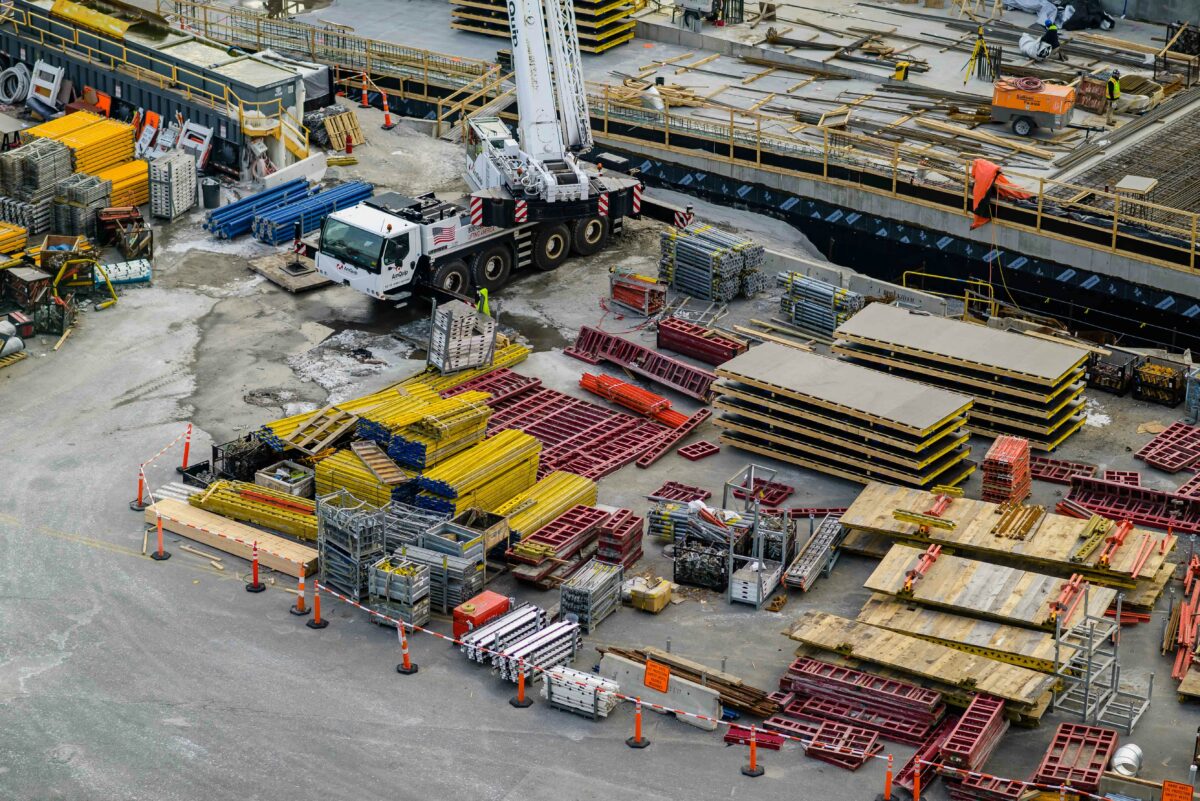
Public sector construction is under pressure from every direction. Ageing school buildings need replacing or upgrading. Hospital estates need modernising to meet clinical standards. Council offices need refurbishing for hybrid working. Police stations, fire stations, courts, and military installations all need investment. At the same time, construction costs have risen sharply, budgets are constrained, and sustainability targets require every project to contribute to net zero commitments. Running a standalone procurement is slow, resource-intensive, and pulls procurement teams away from other priorities.

About our framework

Most public sector organisations manage building estates that need continuous investment: refurbishments, extensions, new builds, condition-driven repairs, and adaptations to meet changing service requirements. The challenge is not just finding a contractor. It is finding a contractor who understands the specific requirements of public sector construction, who can work in occupied buildings where services must continue, who meets the accreditation standards your organisation requires, and who can be appointed through a procurement route that is compliant, auditable, and defensible under the legislation governing your nation, whether that’s the Procurement Act 2023 in England, Wales, and Northern Ireland, or the Procurement Reform (Scotland) Act 2014 and Public Contracts (Scotland) Regulations 2015 in Scotland.

For organisations that only run one or two construction projects a year, the procurement overhead of each standalone process is disproportionate. For organisations managing rolling capital programmes across multiple sites, the cumulative procurement burden is significant. Either way, the time spent procuring the contractor is time not spent delivering the project. And where procurement teams are stretched across multiple priorities, construction procurement often takes longer than it should because it competes for attention with everything else.

This framework was designed to remove that procurement overhead. It provides a pre-evaluated supply chain of construction consultants and contractors that you can appoint through direct award or mini-competition without running a standalone procurement each time. The framework is managed under FAC-1, a collaborative alliance contract that encourages long-term, partnership-based relationships rather than adversarial, project-by-project contracting. It is available to any UK public sector organisation and covers any type of non-residential construction works, from a classroom extension to a new hospital wing.

What's included?

Multi-discipline construction consultancy

If you need professional advice before, during, or after a construction project, this lot covers it. Two national suppliers provide the full range of construction consultancy disciplines: project and programme management, architectural design, civil and structural engineering, building services and M&E engineering, sustainability and environmental consultancy, health and safety and principal designer services, town and master planning, asset and estate management, and decarbonisation and retrofit consultancy. There are no restrictions on the type of consultancy that can be accessed, and you can appoint through direct award or mini-competition. For organisations that need a single multi-discipline consultancy team for a complex project, or a specialist in one discipline for a focused piece of work, the lot provides both routes.

Major construction works (projects over £10m)

For large-scale construction projects with a value exceeding £10 million, one national contractor has been appointed as a non-residential construction specialist with proven experience across multiple public sector settings. They act as principal contractor and can deliver complex, high-value schemes across any sector and building type. Direct award is the standard route for this lot, giving you fast access to a contractor who has already been evaluated for quality, capability, and public sector experience. While the lot is designed for projects above £10m, there is flexibility for works below this threshold where both the contractor and the customer agree.

Minor construction works (projects up to £12m)

For construction projects up to £12 million, six contractors have been appointed across ten regions: North West, North East, Yorkshire and the Humber, West Midlands, East Midlands, South West, London and South East, East of England, Wales, and Northern Ireland. Each region has a single appointed contractor, which means direct award is the standard route. These are regional specialists with proven experience in delivering multi-discipline, multi-sector construction works within their specific area. Whether you need a school refurbishment, a leisure centre upgrade, an office conversion, or a new community building, the regional contractor for your area is already evaluated and ready to be appointed.


Building materials for public sector

Key facts at a glance

Solution Type Standard Framework Agreement
Current Status Live
FTS Tender Notice 2025/S 000-006389
Solution Term June 2, 2025 – May 31, 2029
Owner / Issuing Body PfH
Total Lots 3
Suppliers Assigned 9
Quality / Price Split Quality 70% / Price 30%
Procurement Procedure Open procedure (PCR 2015)
Access Routes Direct award or mini-competition
Estimated Total Value £1bn

CPV codes

CPV Code 45000000 – Construction work

Supporting documents

Contract Notice

Framework appointees

Review the list of suppliers available on this framework. See lots section below for suppliers per lot.

Showing 1-9 of 9 suppliers

Ahr Architects LTD
Farrans
Farrans
Lindum Group LTD
Maurice Flynn & Sons LTD
Mcphillips (Wellington) LTD
Meldrum Construction Services
M & J Group (Construction & Roofing) LTD
Peter Haddon & Partners LLP
Seddon Construction Limited

No suppliers found.

Framework lots

Displayed in ranked order, see buyers guide for more information

Similar & in-demand solutions

How to use this framework

Inprova works with you from the point you first identify a need, through procurement, and into ongoing contract delivery. We recommend getting in touch early so we can help you define your requirements and identify the most appropriate procurement route. You can award contracts through two routes: direct award or mini-competition. Contracts can be awarded for any duration necessary to deliver your requirements.

What happens after you award a contract

Appointing a supplier is the start of the process, not the end of it. Whether the contract delivers what was promised depends on what happens next: whether the supplier mobilises on time, whether pricing stays where it should, and whether performance is monitored consistently through the lifetime of the agreement. Our team stays with you from the point of award through to completion, providing the category expertise, procurement authority, and ongoing supplier management that keeps your contract on track. Because every award through a DPS is made via mini-competition, here's what that process looks like from start to finish, and what continues after the contract is signed.

Speak to our team

Our procurement specialists can help you plan a compliant route to market, review your current project or identify the right solution for your organisation.

Inprova NPS Score
noun_692985

Why use this framework?

Direct award to a contractor in 10 to 15 working days

Quality-led evaluation so you can trust the supply chain

FAC-1 alliance model encourages partnership, not adversarial contracting

The framework covers any non-residential construction works. New schools, hospital extensions, office refurbishments, leisure centre upgrades, police station rebuilds, court refits, military training facilities, community buildings, libraries, and any other non-residential building project.

Who can use this framework?

All public bodies as defined by the Public Contract Regulations 2015 and the Public Contract (Scotland) regulations 2015

Frequently asked questions